

Finding The Right Truck For The Job
Choosing between the Ford F-650 vs. Ford F-750 is not about picking the bigger badge. It is about matching the truck to the job, route, body, payload, and the long-term cost of ownership. For contractors, fleet managers, delivery companies, municipalities, and service teams, the right medium-duty truck can make daily work smoother, safer, and more profitable.
Both Ford Medium Duty trucks can be configured for serious vocational work, but they are not interchangeable in every operation. This comparison from Portsmouth Ford explains where the Ford F-650 fits cleanly, where the Ford F-750 provides the needed margin, and how to spec either truck for compliance, upfit weight, and daily duty cycle.
Bottom line:
- Ford F-650 is the best fit for lighter vocational bodies, tighter urban routes, and operations where maneuverability affects productivity every day.
- Ford F-750 is the best fit for heavier upfits, construction upfits, and jobs that need higher-rated configurations for payload or trailer demands.
- Ford F-650 often makes more sense when a contractor wants medium-duty strength without carrying the cost and complexity of a heavier spec than the route requires.
- Ford F-750 is usually the stronger match for dump, tow, and municipal cycles, where body weight and seasonal load swings reduce spec margin quickly.
- Licensing, insurance, and compliance can change with GVWR and GCWR, so the right winner depends on the exact build, not just starting MSRP.
| Feature / Category | Ford F-650 | Ford F-750 |
|---|---|---|
| Core role | Lighter-to-mid vocational work | Heavier vocational work |
| Typical route fit | Tighter streets, frequent stops | Heavier haul routes, tougher cycles |
| GVWR availability | Up to 29,000 lbs. when properly equipped | Up to 37,000 lbs. when properly equipped |
| Engine options | 7.3L V8 gas engine or 6.7L Power Stroke® Turbo Diesel | 7.3L V8 gas engine or 6.7L Power Stroke® Turbo Diesel |
| Gas engine output | 335 hp, 468 lb.ft. torque | 335 hp, 468 lb.ft. torque |
| Diesel torque ceiling | Varies by calibration, up to 850 lb.ft. torque in listed applications | Varies by calibration, up to 850 lb.ft. torque in listed applications |
| Common body types | Box truck, stake bed, service, utility body | Dump, tow body, municipal, heavier haul bodies |
| Maneuverability | Usually easier to package for tighter access | Usually favors capacity over agility |
| Upfit bias | Right-sized bodies and lower body weight | Heavier bodies and higher-demand equipment |
| CDL requirement | Depends on spec and use | More likely in higher-rated builds, depending on the law |
| Buyer priority | Balance capability with efficiency | Preserve headroom for demanding jobs |
Ford Truck Capability: Ford F-650 vs. Ford F-750
The Gross Vehicle Weight Rating is the maximum legal operating weight of the truck itself, including the chassis, body, fuel, people, tools, and cargo. The Gross Combined Weight Rating combines the truck and trailer, which is why these ratings affect compliance, body selection, insurance exposure, and whether a promising build becomes overloaded on its busiest day.
Ford lists properly equipped Ford F-650 and Ford F-750 models with up to 37,000 lbs. GVWR and up to 50,000 lbs. GCWR, but that headline number does not eliminate configuration math. Drivers comparing Ford F-650 vs. F-750 should treat those limits as a framework, because the Ford F-650’s payload capacity and the Ford F-750’s towing capacity still vary by wheelbase, axle ratio, engine, body, and trailer setup.
A practical estimate starts with the body, payload, passengers, tools, fuel, trailer tongue weight, and accessories such as liftgates, compressors, or a tow body package. Build the spec sheet around the heaviest legal day on the route, not the average day, because average-day thinking is what creates overloaded axles, shortened brake life, and insurance questions after an incident.
Category winner: Ford F-750 — When capability margin is the deciding factor, the Ford F-750 usually gives heavier vocational buyers more room to spec confidently.
Engines and Power Delivery: Ford F-650 vs. Ford F-750
The Ford F-650’s engine specs should be reviewed with your actual duty cycle in mind. The available 7.3L V8 gas engine is listed by Ford at 335 hp and 468 lb.ft. torque, while the 6.7L Power Stroke® Turbo Diesel can support higher-torque applications, with Ford listing diesel torque levels up to 850 lb.ft. torque in some applications.
The 7.3L V8 gas engine can be a practical choice for local routes, service calls, delivery work, and operations where acquisition cost and simpler operation matter. The 6.7L Power Stroke® Turbo Diesel is often better suited to frequent towing, heavier loads, long grades, PTO demand, and higher-mileage commercial use.
Ford F-650 vs. F-750 engine shopping is less about which truck has the better engine and more about how the engine, transmission, gearing, and body work together. The TorqShift® heavy-duty transmission helps manage heavy loads, while available PTO and live-drive PTO capabilities can support hydraulics and jobsite equipment needs.
Category winner: Ford F-750 — With heavier-duty use cases more common in its buyer profile, the Ford F-750 benefits more often from diesel torque and towing-oriented spec choices.
Upfit Flexibility and Vocational Fit: Ford F-650 vs. Ford F-750
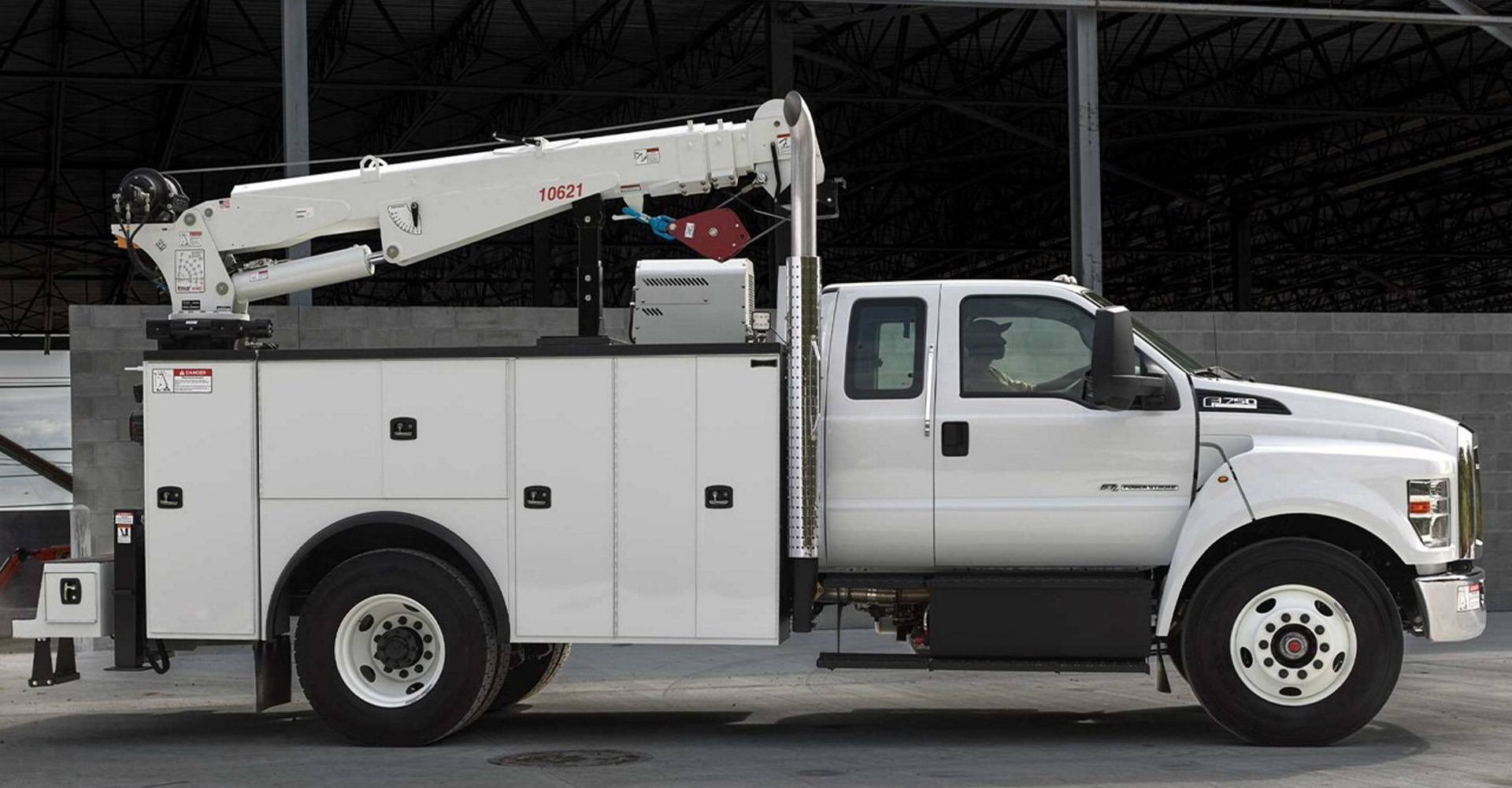
Wheelbase, cab-to-axle, frame length, and axle ratio determine whether a body fits correctly and remains stable when loaded. In comparing the Ford F-650 vs. F-750, those dimensions matter because a dump body, crane service body, or municipal applications package can shift weight distribution enough to change the correct chassis choice.
Both trucks can support box, stake, service, utility, landscape, dump, tow, and municipal builds, but the fit differs by body mass and center of gravity. A buyer planning a tall body, dense material loads, or frequent trailer use should prioritize payload distribution and axle loading first, because poor weight balance creates handling problems long before the truck reaches an advertised maximum.
Use an upfit checklist that includes body weight, mounted equipment, hydraulic or PTO requirements, turning-radius needs, jobsite access, and bridge or route restrictions. This is where the Ford F-650 often wins for lighter bodies and tighter access, while the Ford F-750 becomes more persuasive when the upfit itself consumes a large share of available weight.
Category winner: Ford F-750 — For heavier vocational bodies and more demanding upfit combinations, the Ford F-750 usually offers the cleaner spec path.
Safety and Driver Tech: Ford F-650 vs. Ford F-750
Medium-duty trucks spend long hours in real traffic, on tight jobsites, in loading areas, and in municipal spaces. Ford Co-Pilot360® technology can help support driver awareness, while Ford also notes that available driver-assist features on Ford F-650 and Ford F-750 models include Automatic Emergency Braking, Lane-Keeping Alert, Adaptive Cruise Control, and Forward Collision Warning.
In Ford F-650 vs. F-750 shopping, driver confidence should be part of the conversation. A Ford F-650 may be easier to manage on tight delivery routes, while a Ford F-750 may give drivers more confidence when the truck is built for heavier, more demanding work. Mirrors, cameras, body visibility, turning radius, braking setup, and driver training can be just as important as power.
Category winner: Ford F-650 — In fleets where tighter routes and frequent stops drive incident risk, the Ford F-650 usually gains the most from its easier-to-manage footprint.
Maneuverability and Route Fit: Ford F-650 vs. Ford F-750
Higher capacity usually brings longer wheelbases, heavier axle configurations, and a larger operating footprint, so route fit is never a minor detail. The Ford F-650 generally suits tight residential work, downtown deliveries, alley backing, and fenced jobsite access more naturally, while the Ford F-750 often accepts those constraints only if the workload truly requires the added headroom.
Ask two questions before finalizing a spec: what is the tightest turn on the regular route, and how often does the truck back into confined spaces? Those answers often decide Ford F-650 vs. F-750 faster than headline ratings do, because a truck that cannot enter the site efficiently turns capacity into idle time.
Construction access roads and transfer-station runs can justify the Ford F-750 if loads stay heavy and repetitive. Frequent curbside stops, service dispatches, and compact loading zones usually point toward the Ford F-650.
Category winner: Ford F-650 — For maneuverability, parking, and daily access constraints, the Ford F-650 is usually the more practical tool.
Reliability, Maintenance, and Common Issues to Watch: Ford F-650 vs. Ford F-750
The typical discussion of “common problems” in trucks often focuses less on the flaws of a specific model and more on whether the truck is well-suited to its intended use. Issues such as brake wear, tire performance, cooling systems, DEF systems in diesel models, PTO components, hydraulics, and electrical connections for upfits are the factors that most frequently contribute to downtime in vocational trucks.
Maintenance intervals should take into account factors such as route severity, idling time, payload consistency, and seasonal demands. For example, a truck that transports mulch in the spring and salt in the winter will experience less wear and tear than a truck that operates with a light service body year-round.
Standardizing consumables and common parts across the fleet reduces downtime and purchasing friction. In Ford F-650 vs. F-750 ownership, the lower-risk truck is usually the one that was not overspec’d or underspec’d for the work.
Category winner: Ford F-650 — When the job does not require the heavier chassis, the Ford F-650 often keeps maintenance and operating complexity more manageable.
Dump Bodies and Heavy Vocational Builds
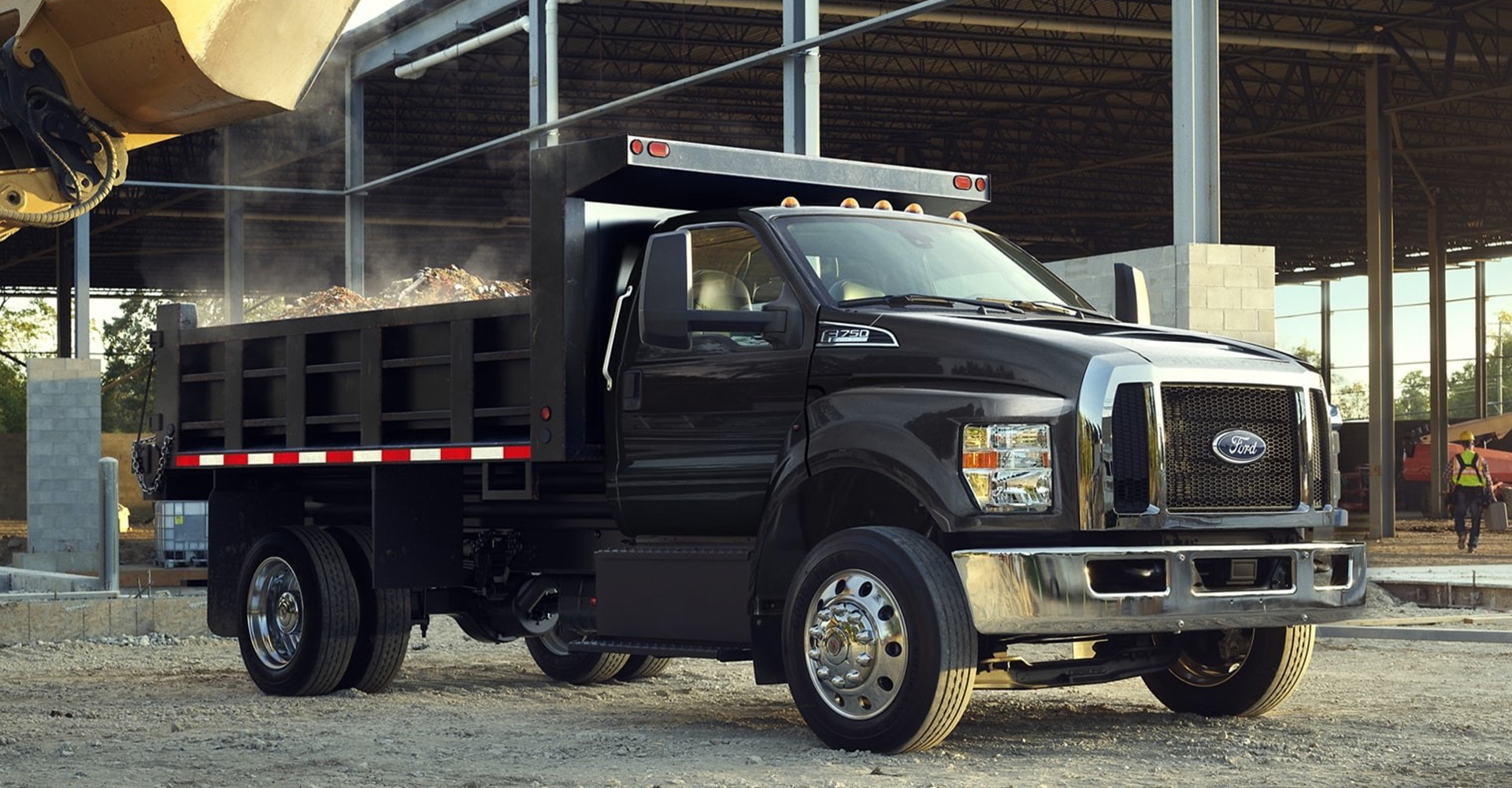
Ford F-750 dump truck specs depend on the chassis, wheelbase, cab-to-axle measurement, axle ratio, frame length, hydraulics, dump body, PTO requirements, and material weight. A dump truck used for mulch, brush, and lighter landscape material does not face the same stress as one hauling stone, asphalt, debris, or municipal road materials.
A Ford F-750 dump body build can be a strong option for contractors, road crews, municipalities, and construction teams that need higher capacity and durability. However, the right build should be planned before the truck is ordered. Hydraulics, PTO needs, body height, loading equipment, air brakes, and axle placement can all affect the final result.
In a Ford F-650 vs. F-750 decision, the Ford F-750 becomes more persuasive when the upfit itself is heavy. If the body, equipment, and expected payload push the Ford F-650 to its limits, the Ford F-750 may offer a better long-term solution.
When to Choose the Ford F-650 or the Ford F-750
Choose Ford F-650 if:
- You run delivery, service, or landscape routes where maneuverability and frequent stops matter.
- Your body and payload targets fit comfortably without needing the highest GVWR configurations.
- You want medium-duty capability aligned to the duty cycle rather than extra chassis you may not use.
- You are planning a box, stake, or service body where overall length and access are daily constraints.
Choose Ford F-750 if:
- You expect heavier vocational bodies or consistently higher payload demands.
- You tow frequently or need more margin for trailer weight, grades, and long-haul stability.
- You are building a dump, tow, or construction-focused configuration where spec headroom matters.
- Your operation benefits from higher-rated configurations to handle seasonal peaks and job changes.
CDL requirements depend on GVWR, GCWR, local law, and use case, so compliance should be confirmed before ordering. In Ford F-650 vs. F-750 decisions, legal fit is as important as mechanical fit.
Find Your Powerful Pickup at Portsmouth Ford
Portsmouth Ford in Portsmouth, NH, is a smart place to start if your business is comparing Ford F-650 vs. F-750 options for commercial use. Instead of guessing your way through starting MSRP, payload, towing, and upfit questions, you can work with a Ford dealership that understands commercial truck shopping and the importance of building around the actual job.
Whether you need a Ford F-650 for a delivery route, a Ford F-750 for heavier vocational work, or help comparing Ford F-650 vs. Ford F-750 options for your fleet, Portsmouth Ford can help you shop with confidence. Bring your body requirements, expected payload, towing needs, duty cycle, route details, and equipment list so the team can help you find a truck that works as hard as your business does.
FAQs
Is the Ford F-650 considered a medium-duty truck?
Yes. The Ford F-650 is commonly classified as a medium-duty commercial truck, with final class depending on the GVWR configuration you select.
What is the difference between the Ford F-650 and Ford F-750?
In most builds, the Ford F-750 supports heavier vocational upfits and higher-rated use cases. The Ford F-650 often fits lighter-to-mid-duty bodies where maneuverability and right-sizing matter more.
What are the common problems with a Ford F-650?
Most concerns are maintenance-related, including brake and tire wear, upfit electrical connections, and diesel emissions-system upkeep on diesel builds. A truck matched to the job and serviced on schedule usually has fewer downtime issues.
Do I need a CDL for a Ford F-750?
Sometimes. CDL requirements depend on GVWR, GCWR, state rules, and how the truck is used, so confirm compliance from the exact specs.
Which engine is better for Ford F-650 vs. F-750: gas or diesel?
It depends on duty cycle. The 7.3L gas V8 often suits local stop-and-go work, while the 6.7L Power Stroke® Turbo Diesel is often chosen for frequent towing, heavy loads, and sustained grade work.
Connect with us


Recent Blog Entries
- Ford Super Duty Dually Guide: F-350, F-450, F-550, F-650 & F-750 Explained
- Ford Chassis Cab Buyer’s Guide: Which Model Is Right For Your Business?
- Ford F-250 vs. F-350: What’s the Difference and Which Truck Is Right for You?
- Ford F-450 Vs. F-550: Specs, Payload, And Key Differences
- Ford F-650 Vs. F-750: Which Medium-Duty Truck Is Right For Your Job?