
Which Dually Model Is Right for You?
Buyers often see similar Ford badges and assume the trucks differ only by size, but the real differences are in ratings, frames, axle limits, and intended job type. Whether you’re comparing a Ford F-350 dually, Ford F-450 dually, Ford F-550 dually, Ford F-650 dually, or Ford F-750 dually, the useful question is not which truck sounds toughest, but which one matches your trailer, payload, upfit, and legal operating limits. This Ford Super Duty dually guide focuses on real workload decisions, from pickup towing with available electronic shift-on-the-fly 4WD to vocational body planning on medium-duty trucks. Understanding the differences between these dually models can help you choose the right truck from Portsmouth Ford for your business, fleet, or heavy-duty towing needs.
What You’ll Learn in This Guide
Our Ford Super Duty dually guide explains how dual rear wheels improve stability, payload handling, and towing confidence, especially with tall trailers, heavy pin weight, or commercial cargo. You’ll also see how to compare a Ford F-350 dually, Ford F-450 dually, Ford F-550 dually, Ford F-650 dually, and Ford F-750 dually based on trailer type, upfit needs, ratings, and real-world workload.
Quick Comparison Table
| Model | Vehicle Type | Typical GVWR Range | Hitch / Body Fit | Upfit Friendliness | Common Buyer |
|---|---|---|---|---|---|
| F-350 DRW | Heavy-duty pickup | Lower than chassis cab classes | Bumper pull, fifth-wheel, gooseneck | Moderate | RV owner, contractor |
| F-450 DRW | High-capability pickup | Pickup-focused heavy-duty class | Strong fit for fifth-wheel and gooseneck | Moderate | Serious tower |
| F-550 Chassis Cab | Commercial chassis cab | Higher commercial class | Body-dependent, hitch-dependent | High | Fleet, trades |
| F-650 | Medium-duty truck | Higher medium-duty class | Vocational and commercial | Very high | Delivery, towing, utility |
| F-750 | Largest in this group | Highest vocational class here | Specialized commercial | Very high | Municipal and fleet |
What Is a Dually Truck?
A dually, also called a DRW or dual-rear-wheel truck, has two rear tires on each side of the rear axle. That extra rear tire capacity helps manage heavy loads, commercial bodies, and large trailers that can push a single-rear-wheel truck past its practical limits.
Why Choose a Dually Over a Single-Rear-Wheel Truck?
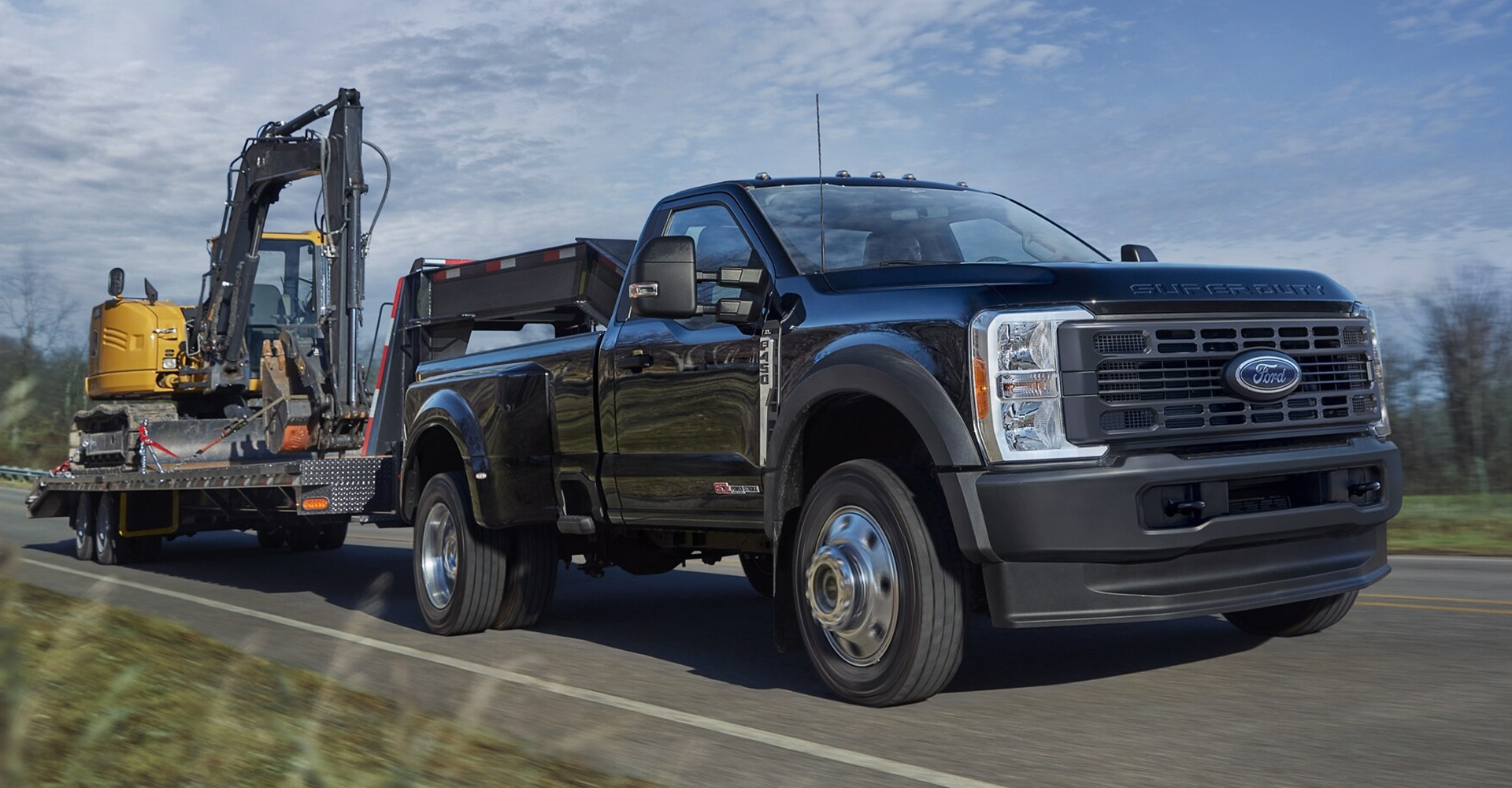
A dually can feel more stable with a fifth-wheel RV, gooseneck trailer, equipment trailer, or loaded service body because the wider rear footprint helps resist sway and side-to-side movement. Features like trailer sway control, available towing technology, and driver-assist camera views can add confidence, but the biggest advantage is how a DRW truck manages rear-axle stress under serious load. The tradeoffs matter, too. Dually trucks are wider, cost more to tire, fit fewer parking spaces, and may feel less forgiving on slick roads when unloaded.
Overview of the Ford Super Duty Dually Lineup
The Ford Super Duty dually lineup moves from pickup-based heavy towing to upfit-ready chassis cabs and medium-duty commercial trucks. The right choice depends less on badge size and more on GVWR, GAWR, payload, hitch type, body style, and how the truck will be used every day.
A Ford F-350 dually is often the best fit for drivers who want strong towing capability with a traditional pickup bed. A Ford F-450 dually adds more control margin for large fifth-wheel RVs, gooseneck trailers, and frequent heavy towing. A Ford F-550 dually is built for commercial upfits, including flatbeds, dump bodies, utility bodies, and service trucks. A Ford F-650 dually moves into medium-duty territory for larger bodies, regional delivery, towing, and utility work. A Ford F-750 dually is Ford’s largest Super Duty work truck, built for demanding vocational roles, fleet use, and specialized commercial applications.
Capability Basics to Know Before You Compare
Before choosing between a Ford F-350 dually, Ford F-450 dually, Ford F-550 dually, Ford F-650 dually, or Ford F-750 dually, focus on the numbers that actually control the job. GVWR is the truck’s maximum allowed weight, GAWR limits each axle, payload is what the truck can carry, and GCWR is the maximum combined weight of truck and trailer. Payload is reduced by passengers, fuel, tools, hitch hardware, accessories, and upfit equipment. Rear GAWR is especially important for fifth-wheel and gooseneck towing because pin weight lands near the rear axle, which is often where buyers hit their first hard limit.
Trailer Types: Bumper Pull, Gooseneck, and Fifth-Wheel
Bumper-pull trailers place tongue weight behind the axle, which can increase leverage and sway if the trailer is long or improperly loaded. Gooseneck and fifth-wheel trailers distribute weight in the bed for better stability, but they also use up payload faster. That is why many buyers run out of rear-axle or payload capacity before reaching a truck’s advertised max tow rating.
Ford F-350 Dually: Everyday Heavy-Duty Capability
The Ford F-350 dually is a strong starting point for buyers who tow often but still want pickup-bed flexibility. It works well for fifth-wheel campers, horse trailers, equipment trailers, ranch use, and small-business hauling. For many owners, the Ford F-350 dually is the most balanced choice because it combines serious DRW stability with everyday usability.
Ford F-450 Dually: Maximum Pickup-Style Towing
The Ford F-450 dually is designed for drivers who tow large trailers often and want more control, braking confidence, and stability. It is a strong match for large RVs, heavy gooseneck trailers, multi-car trailers, and frequent mountain towing. Buyers should still confirm the door-sticker payload, as pin weight, passengers, fuel, and cargo all affect real-world capacity.
Ford F-550 Dually: Commercial Chassis Cab Strength
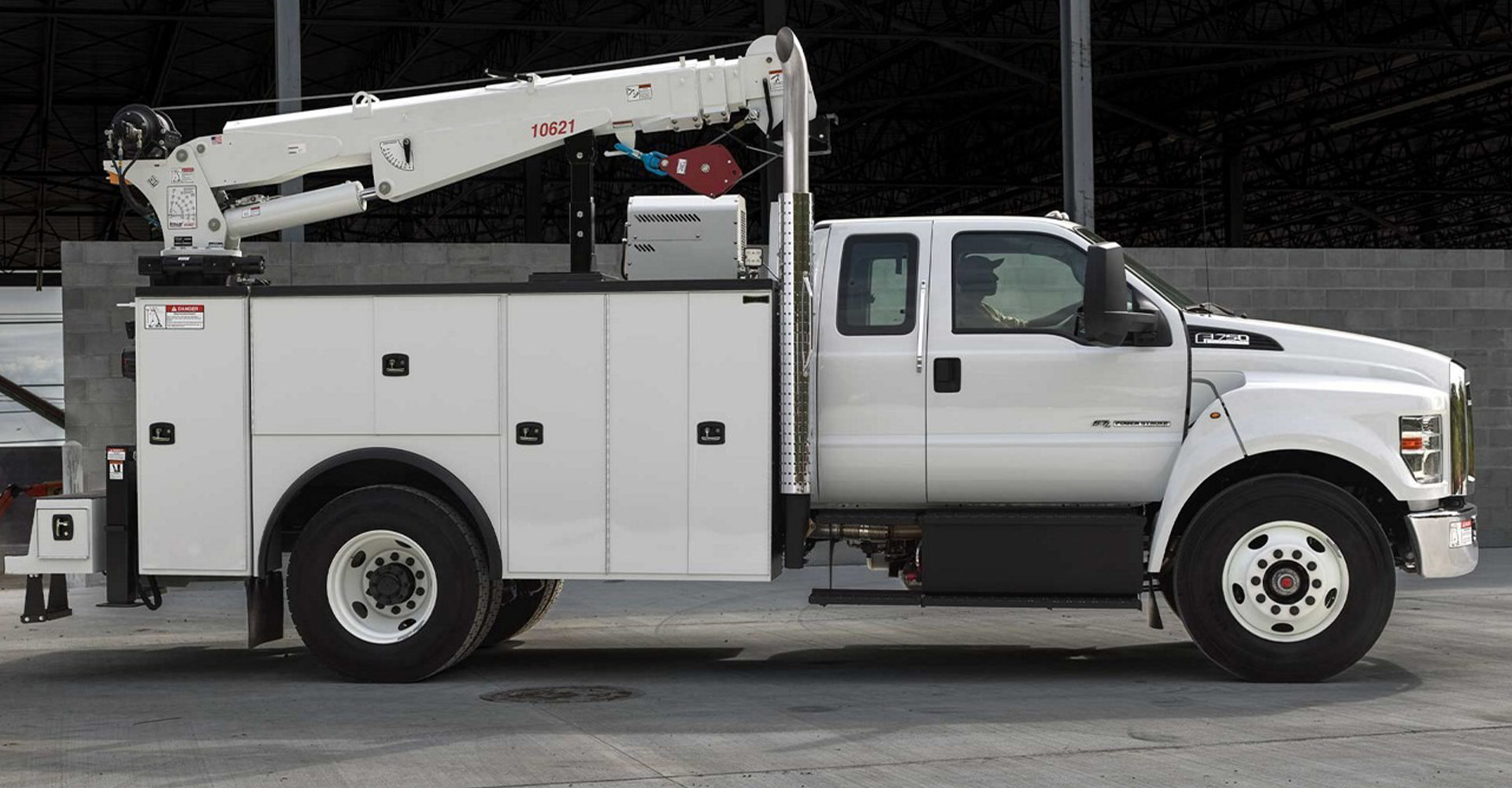
The Ford F-550 dually is built around the job, not just the trailer. As a chassis cab, it can be configured with flatbeds, dump bodies, landscape bodies, tow equipment, utility bodies, cranes, compressors, and other vocational upfits. It is often the right choice for contractors, landscapers, municipalities, utilities, and mobile service businesses that need a truck to carry equipment and tow in the same workday.
Ford F-650 Dually: Medium-Duty Work Capacity
The Ford F-650 dually steps beyond pickup-style thinking into medium-duty commercial use. It is commonly chosen for box trucks, tow trucks, beverage delivery bodies, larger utility builds, and regional fleet work. For businesses that repeatedly max out smaller trucks, the Ford F-650 dually can offer the durability, body capacity, and serviceability needed for higher-demand routes.
Ford F-750 Dually: Ford’s Largest Super Duty Work Truck
The Ford F-750 dually is built for serious vocational demands, specialized bodies, and high-utilization fleets. Common configurations include large dump trucks, rollback carriers, fire and rescue units, and heavy commercial bodies. This truck makes the most sense when the work consistently requires its size, ratings, and commercial capability.
How to Choose the Right Ford Super Duty Dually
Start with your trailer’s real loaded weight, not its brochure number. Then calculate passengers, fuel, tools, cargo, hitch weight, tongue weight, pin weight, and any upfit equipment. Match those numbers to GVWR, GAWR, GCWR, payload, hitch rating, tire rating, and wheel rating before choosing a truck. For many RV owners, a Ford F-350 dually works well, while a Ford F-450 dually adds confidence for larger fifth-wheels or frequent heavy towing. For contractors and owner-operators, a Ford F-550 dually often makes sense when a working body is part of the job. For fleets, a Ford F-650 dually or Ford F-750 dually may be the smarter long-term choice when uptime, body capacity, and vocational durability matter most.
Common Mistakes to Avoid
The biggest mistake is shopping based solely on max tow rating. A truck can have enough power to pull a trailer and still be overloaded at the axle, tires, wheels, or the hitch or payload limit. Whether you choose a Ford F-350 dually, Ford F-450 dually, Ford F-550 dually, Ford F-650 dually, or Ford F-750 dually, the best choice is the one that matches the job safely, legally, and confidently.
Find Your Dually
Choosing between a Ford F-350 dually, Ford F-450 dually, Ford F-550 dually, Ford F-650 dually, and Ford F-750 dually comes down to matching the truck to the work you need it to do. Whether you’re towing a large RV, hauling equipment to the jobsite, managing a fleet, or planning a specialized commercial upfit, understanding payload, towing capacity, axle ratings, and intended use will help you make a confident decision. If you’re ready to compare models in person or need help finding the right Ford Super Duty dually for your needs, visit Portsmouth Ford. Our team can walk you through the differences between each Ford Super Duty dually model, review your towing or business requirements, and help you find a truck built to handle the demands of your workload.
FAQs
Is the Ford F-450 Always a Dually?
In consumer pickup form, the Ford F-450 is typically a DRW truck, but buyers should still verify the exact configuration and market. The key distinction is its towing-oriented hardware, not just the badge.
Can You Daily Drive a Dually Truck?
Yes, but daily use means living with extra width, higher tire cost, and tighter parking options. The tradeoff is much better stability when the truck is actually working.
What Is the Difference Between a Ford F-550 and Ford F-650?
The Ford F-550 is a Super Duty chassis cab designed around upfits and heavy commercial work. The Ford F-650 is a medium-duty truck with higher GVWR options and a stronger fit for larger bodies and harder daily cycles.
Which Ford Dually Has the Highest Towing Capacity?
Towing capacity depends on configuration, hitch type, axle ratio, and GCWR, so there is no single universal winner across every setup. Use the official Ford towing guide and your truck’s labels for the exact answer.
Do You Need a CDL to Drive a Ford F-650 or F-750?
Sometimes, because CDL rules depend on GVWR, GCWR, trailer weight, and local law. Confirm requirements with your DMV, employer, and insurer before ordering the truck.
What tows more, Ford F-450 or Ford F-550?
It depends on the configuration and hitch type. The Ford F-450 is often optimized for very high towing capacity, while a Ford F-550 can vary widely depending on body weight, axle ratio, and GCWR.
How much can a Ford F-550 legally tow?
Legal towing depends on the truck’s GCWR, hitch rating, trailer brake setup, and local regulations. Use the exact VIN-based ratings and confirm operating rules with your local DMV.
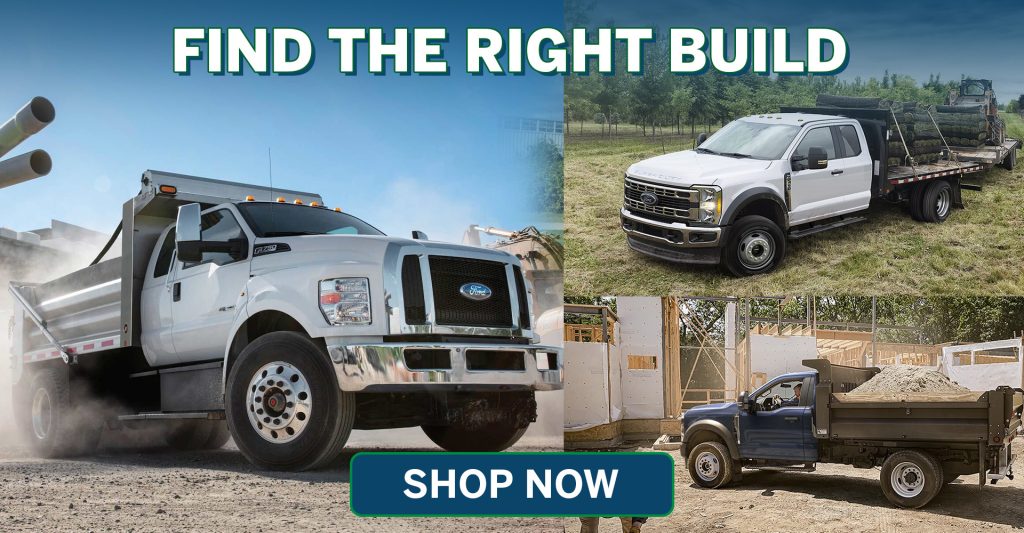
Choosing A Model That Works For Your Business
Choosing the right commercial truck starts with one question: what does the finished truck need to do every day? For many contractors, fleet managers, municipal departments, landscapers, plumbing companies, towing companies, and service teams in and around Portsmouth, NH, the answer is not a standard pickup. It is a truck that can be built around the job. That is where a Ford Chassis Cab becomes such a practical choice.
At Portsmouth Ford, businesses throughout Rockingham County shop for commercial trucks with real work in mind. Some need a compact service body for daily repair calls. Others need a dump body, flatbed, box body, rollback, wrecker, or crane upfit that can handle heavy loads and long duty cycles. A Ford Chassis Cab gives you the foundation to build that truck correctly from the start.
Unlike a pickup with a factory bed, Ford Chassis Cabs are designed with exposed frame rails so an upfitter can add the right work body for your business. That setup lets you plan for GVWR, payload, towing capacity, axle rating, wheelbase, cab-to-axle dimensions, electrical load, and body weight before the truck ever goes to work. For business owners who depend on uptime, that planning matters.
Why Businesses Shop Chassis Cab Trucks
A Ford Chassis Cab is built for commercial customization. Instead of forcing your business to work around a consumer pickup layout, it lets you start with the cab, frame, powertrain, and capability you need, then add a body that supports your daily operation.
That flexibility is useful across many industries. A contractor may want a stake bed or dump body for materials. A plumbing company may need a utility body with organized compartments and secure tool storage. A landscaper may need payload capacity for equipment, mulch, stone, and seasonal gear. A towing company may need a rollback, wrecker, PTO equipment, and dependable electrical support. A municipal fleet may need a truck that can handle stop-and-go driving, jobsite idling, winter work, and specialized upfits.
This is why shopping for a Ford Chassis Cab at Portsmouth Ford is less about picking a trim and more about matching a truck to your business model. The right setup should support your workload today while giving your fleet enough margin for growth.
Start With the Upfit, Not the Badge
The smartest way to shop for a Ford Chassis Cab is to begin with the upfit. Before choosing a model, consider the body style, installed body weight, expected cargo, passenger count, towing needs, and equipment that draws power from the truck.
A utility body, service body, dump body, flatbed, box body, rollback, wrecker, and crane upfit all place weight in different areas. That matters because the finished truck must stay within GVWR, payload, front and rear axle ratings, and braking limits. A build that looks fine on paper can become frustrating if the work body is too heavy, the wheelbase is wrong, or the cab-to-axle dimension does not match the body.
Portsmouth Ford can help commercial shoppers think through these details before they commit. That is especially helpful for buyers around Portsmouth, NH, and Rockingham County who need one truck to handle mixed routes, tight jobsites, rural roads, customer stops, and seasonal demands.
Key Specs That Matter Most
When comparing a Ford Chassis Cab, the big numbers matter, but they need to be read in context. GVWR tells you the maximum loaded weight rating of the truck. Payload helps determine how much the truck can carry, including the body, equipment, fuel, passengers, and tools. Towing capacity matters for trailers, equipment, and vocational work, but it should never be considered in isolation from payload and axle ratings.
Wheelbase affects ride quality, turning radius, stability, and body compatibility. A longer wheelbase may support a larger work body, but it can make the truck harder to maneuver through tight parking lots, narrow alleys, and compact jobsite entrances. Cab-to-axle is just as important because it helps determine what body length and rear overhang will fit correctly.
Electrical planning also matters. Auxiliary switches, alternator output, battery capacity, liftgates, lighting, compressors, pumps, and control systems all add demand. Ford’s Vehicle Integration System 2.0 can help support equipment integration by providing upfitters with a cleaner way to connect to and control certain aftermarket functions. For many businesses, that can mean a more organized build with fewer compromises.
Choosing the Right Cab and Drivetrain
A Ford Chassis Cab can be configured around different cab needs. A Regular Cab often works well when maximum frame space and body length are priorities. A SuperCab can add useful interior room without going as large as a full crew setup. A Crew Cab is a smart choice when your truck regularly carries multiple workers, supervisors, or technicians.
Drivetrain choice is another practical decision. For commercial shoppers in Rockingham County, 4×4 or 4WD can be valuable for winter weather, muddy jobsites, gravel lots, and uneven terrain. The tradeoff is added weight, cost, and maintenance, so it should be chosen because the work requires it. For businesses that spend most of their time on paved roads, a simpler setup may be the better long-term value.
Engine and transmission choices should also match real-world use. The 7.3L V8 gas engine and 10-speed automatic transmission are familiar options in the Ford Super Duty® commercial space, depending on model and configuration. The right setup should reflect stop-and-go driving, towing frequency, average payload, jobsite idling, and daily duty cycle rather than peak numbers alone.
Ford F-350 Cab and Chassis
The Ford F-350 Cab and Chassis is often a strong fit for businesses that need commercial capability without stepping into a larger truck than the job requires. It can work well for lighter service builds, mobile repair needs, and organized vocational setups where maneuverability is just as important as strength.
For plumbers, electricians, HVAC teams, and smaller contractors, this model can make sense with a utility body or service body that keeps tools secure and accessible. It gives local businesses a practical way to move beyond a standard pickup while still keeping the truck manageable for daily routes around Portsmouth and nearby Rockingham County communities.
Ford F-450 Cab and Chassis
The Ford F-450 Cab and Chassis is often the next logical step for businesses that need greater payload capacity, towing, or the ability to handle heavier equipment. It can be a strong fit for contractors, service fleets, and trades that carry more tools, larger compartments, compressors, generators, or specialty equipment.
For many commercial shoppers, this is the middle ground. It offers more capability than a lighter build while still staying within the familiar Ford Super Duty® family. If your finished work body, tools, crew, and trailer needs are starting to push the limits of a smaller truck, this model deserves a close look at Portsmouth Ford.
Ford F-550 Cab and Chassis
The Ford F-550 Cab and Chassis is built for heavier vocational work where body weight, payload, and equipment demands are a larger part of the conversation. This model is often considered for dump body applications, larger service body setups, heavier flatbed builds, and certain crane upfit needs, depending on final configuration.
A Ford Chassis Cab in this class can be a smart choice for businesses that cannot afford to operate at the edge of their ratings every day. Landscapers, construction crews, municipal departments, and material-hauling businesses often need that extra margin because real-world loads are rarely as light as early estimates.
Ford F-650 Cab and Chassis
The Ford F-650 Cab and Chassis moves into medium-duty territory for larger vocational applications. It is often considered when the finished build needs more structure, larger body options, stronger commercial presence, or a harder duty cycle than a lighter truck can comfortably support.
This model can be a fit for box body builds, larger dump applications, delivery routes, tow-related work, and fleet use where the truck is expected to handle demanding schedules. Medium-duty ownership also brings different considerations for service planning, compliance, insurance, and driver requirements, so buyers should look beyond the purchase price and consider total operating costs.
Ford F-750 Cab and Chassis
The Ford F-750 Cab and Chassis is the highest-capacity option in this group and is intended for serious commercial work. It is commonly used for heavy-duty applications, rollback applications, wrecker setups, municipal fleet use, and businesses that need durability under repeated heavy loads.
This is not the truck most buyers choose for occasional heavy work. It is the option to consider when the body, route, load, and duty cycle point clearly toward medium-duty strength. If your business needs a truck that can handle demanding work day after day, Portsmouth Ford can help you compare whether this larger platform is the practical answer.
Matching the Truck to the Work
The best Ford Chassis Cab setup depends on the finished job. A plumbing company may need a compact service body with secure storage, good turning radius, and dependable electrical support. A contractor may need a flatbed or stake bed that can carry materials without wasting capacity. A landscaper may need a dump body and 4WD for seasonal work and uneven sites. A towing company may need PTO capability, stronger electrical planning, and the right platform for a rollback or wrecker.
The goal is not simply to buy the biggest truck. The goal is to buy the right truck. Too little truck can create payload issues, premature wear, and daily frustration. Too much truck can raise costs, reduce efficiency, and make local routes harder than they need to be. A properly selected Ford Chassis Cab should feel built for your business, not borrowed from someone else’s.
Common Mistakes to Avoid
One common mistake is shopping only by model name instead of finished weight. Body weight, mounted equipment, fuel, crew, tools, and cargo all affect the final payload picture. Another mistake is ignoring axle rating. A truck may appear to have enough total capacity, but if too much weight sits behind the rear axle, the build can still be wrong.
Wheelbase and cab-to-axle planning are also easy to underestimate. If those dimensions do not align with the upfit, the body may not fit correctly, the rear overhang may be incorrect, or the truck may be less stable than expected. Electrical load is another overlooked area, especially when the truck will use lights, compressors, pumps, liftgates, warning equipment, auxiliary switches, or other powered systems.
A Ford Chassis Cab should be planned as a finished tool, not just a truck. The closer your planning reflects the way your business actually works, the better the final build will serve you.
What to Bring When You Shop at Portsmouth Ford
Before visiting Portsmouth Ford, gather as much information as possible about the upfit and workload. Bring the body type, estimated installed body weight, expected cargo, trailer needs, crew size, daily route details, and any equipment that requires electrical support. If you already have an upfit quote or body spec sheet, bring that too.
It also helps to think through your heaviest realistic day. That may include tools, materials, fuel, passengers, attachments, seasonal equipment, and trailer weight. Planning around the average day can lead to an undersized truck. Planning around the heaviest reasonable day helps create a build that works when your business is busiest.
For shoppers in Portsmouth, NH, and throughout Rockingham County, Portsmouth Ford offers a practical place to compare commercial options, talk through configurations, and narrow the lineup based on real business needs. The right Ford Chassis Cab should support your routes, crew, upfit, and long-term workload.
Find Your Commercial Truck at Portsmouth Ford
A well-chosen Ford Chassis Cab can become one of the most valuable tools in your business. It can carry the right load, support the right payload, handle the right towing needs, and make daily tasks more efficient. Whether you need a compact service build, a heavy-duty dump setup, a flatbed, a box body, a municipal fleet truck, or a towing platform, the right choice starts with understanding the work.
Portsmouth Ford is here to help businesses compare commercial Ford trucks with confidence. Visit Portsmouth Ford in Portsmouth, NH, to explore Ford Chassis Cab options, review your upfit needs, and find the model that fits your Rockingham County operation.
FAQs
What is a chassis cab truck?
A chassis cab truck is sold with a cab and exposed frame rails, rather than a factory pickup bed. That design allows an upfitter to add a work body such as a utility body, service body, dump body, flatbed, box body, rollback, wrecker, or crane upfit.
What is a Ford Chassis Cab used for?
A Ford Chassis Cab is used for commercial and vocational work that requires a specialized body. Businesses use these trucks for construction, landscaping, plumbing, HVAC, towing, delivery, municipal work, mobile service, and fleet operations.
How do I choose the right Ford Chassis Cab?
Start with the upfit, then compare GVWR, payload, towing capacity, axle rating, wheelbase, cab-to-axle dimensions, cab style, drivetrain, and electrical needs. Portsmouth Ford can help you match the truck to the finished body and real-world duty cycle.
Is a chassis cab better than a pickup for commercial work?
A chassis cab is often better when your business needs a specialized work body or heavier commercial setup. A pickup can work well for lighter jobs, but a Ford Chassis Cab gives businesses more flexibility for vocational upfits and purpose-built configurations.
Where can I shop for Ford Chassis Cab trucks in Portsmouth, NH?
Businesses in Portsmouth, NH, and across Rockingham County can shop commercial Ford truck options at Portsmouth Ford. The team can help you compare models, discuss upfit needs, and find a configuration that fits your workload.
Find the Ford Super Duty That Works as Hard as You Do
If you’re comparing the Ford F-250 and Ford F-350, chances are you already know a Ford Super Duty is the right fit—now it’s about deciding which model delivers the capability you truly need. While these heavy-duty trucks share the same rugged platform, advanced technology, and available trim levels, the key differences lie in towing strength, payload capacity, rear axle performance, and everyday drivability.
In this guide, we’ll break down the biggest differences between the Ford F-250 and the Ford F-350, including towing and hauling capabilities, single-rear-wheel vs. dual-rear-wheel configurations, ride comfort, truck size, ownership costs, and which truck makes the most sense for your work or lifestyle.
Ready to compare Ford Super Duty trucks in person? Visit Portsmouth Ford today to explore Ford F-250 vs. Ford F-350 specs, features, and inventory firsthand.
Quick Verdict: Ford F-250 vs. Ford F-350
- Best for max towing: Ford F-350
- Best for payload: Ford F-350
- Best value: Ford F-250
- Best daily-driver feel: Ford F-250
- Best for fifth-wheel towing and gooseneck towing: Ford F-350
Ratings vary by engine, axle ratio, cab size, bed length, 2WD versus 4×4, and single-rear-wheel versus dual-rear-wheel configuration. These trucks share much of their hardware, so the real divider is whether you need more payload margin and the stability that comes with the Ford F-350’s broader rear-wheel options and stronger resale value in heavy-use applications.
Head-to-Head Comparison Table
| Feature / Category | Ford F-250 | Ford F-350 |
|---|---|---|
| Starting price | Typically lower MSRP | Typically modestly higher MSRP |
| Max towing potential | Strong, but usually a lower ceiling | Usually higher, especially in DRW configuration |
| Max payload potential | High, but more limited by configuration | Higher in many setups |
| SRW availability | Yes | Yes |
| DRW availability | Typically no | Yes |
| Ride quality unloaded | Often smoother | Often firmer, especially DRW |
| Fuel economy expectations | Similar, depends on the engine and 4×4 | Similar, depends on the engine and setup |
| Turning radius and parking ease | Usually easier | DRW is harder to park |
| Insurance and registration | Often simpler | May be higher depending on GVWR class |
| Resale demand for work use | Broad mainstream appeal | Strong among heavy-haul buyers |
| Bed length choices | Depends on cab and bed length pairing | Similar choices, plus more heavy-duty use cases |
Towing Capacity
Ford F-250 vs. Ford F-350 towing capacity is where many buyers start, but max tow numbers can mislead if you ignore hitch type and payload. A Ford F-250 can tow serious weight with a gooseneck trailer or a conventional towing setup. Yet, the Ford F-350 often unlocks higher towing capacity because Ford certifies more aggressive rear axles, suspensions, and dual-rear-wheel combinations.
The biggest variables are engine choice, axle ratio, cab and bed layout, 4×4 status, curb weight, gross vehicle weight rating, and gross combined weight rating. That matters because a diesel, long-bed, properly geared Ford F-350 may post a much stronger fifth-wheel or gooseneck figure than a similarly equipped Ford F-250, even though the Ford F-250 vs. the Ford F-350 size is often nearly identical in SRW form.
What Changes Towing the Most
A gas engine usually lowers upfront costs, while a diesel often improves towing confidence under sustained load, especially at highway speeds or at altitude. Trailer type matters just as much because a bumper-pull trailer stresses the truck differently than a fifth-wheel, equipment trailer, or gooseneck with a higher hitch load. If your trailer has substantial pin weight or tongue weight, payload can become the limiter before the published tow rating does. That is the practical reason many RV and equipment buyers step up to a Ford F-350 even when brochure towing numbers already look sufficient.
Category winner: Ford F-350 — more configurations, especially DRW setups, push towing ceilings higher and create more margin for demanding trailer types.
Payload and Real-World Hauling
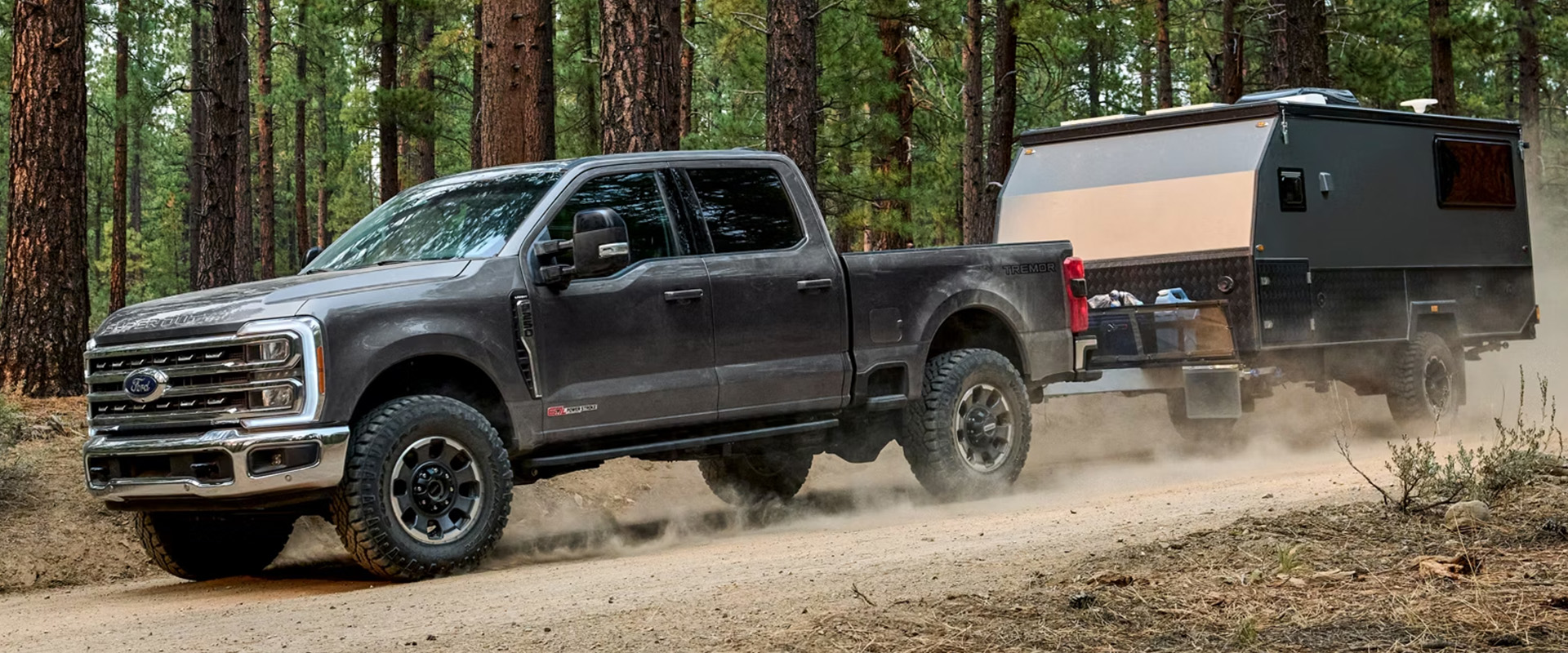
Payload is the total weight the truck can carry in the cab and bed, including passengers, tools, hitch hardware, camper gear, plows, service equipment, and trailer pin weight. In real ownership, payload often matters more than advertised tow numbers because the truck’s door jamb sticker reflects the exact truck you are buying, not an idealized brochure example.
That sticker matters because a diesel engine, 4×4 hardware, upscale trim levels, and options such as a camper package all reduce available payload. A Ford F-250 in a luxury trim can lose meaningful hauling margin, while a Ford F-350 usually preserves more usable capacity and better rear-end composure under the same load.
Payload Traps Buyers Miss
Heavy trim packages and diesel choices can cut payload enough to change which trailer or slide-in setup is realistic. Fifth-wheel pin weight is the classic trap, because many buyers hit payload limits before they ever approach the advertised max tow figure.
The Ford F-350 also tends to squat less and feel more controlled under bed load, especially with a camper or work equipment installed. That stability is not just about ratings; it directly affects braking confidence, steering feel, and long-distance fatigue.
Category winner: Ford F-350 — higher payload ratings and better stability make it the smarter choice for serious hauling, not just bigger brochure numbers.
Rear-Wheel Configuration (SRW vs. DRW)
A single rear wheel means one tire per side on the rear axle, while a dual rear wheel adds two tires per side for a wider, more stable rear track. This is the biggest functional difference between the trucks, because the Ford F-250 is typically SRW only, while the Ford F-350 can be configured as SRW or DRW.
DRW improves payload and reduces sway under heavy campers, hotshot-style towing, and large gooseneck loads. The tradeoff is real-world inconvenience, because extra width complicates parking, garage fit, drive-through access, winter tire strategy, and replacement cost.
SRW vs. DRW Pros and Cons
DRW offers greater stability and higher capacity, while SRW is easier to live with day to day. A narrower footprint also makes SRW trucks less stressful in urban traffic, jobsite gates, and tight residential driveways. DRW means more tires to buy, more width to manage, and more attention when roads narrow. For buyers towing heavy but infrequently, that penalty can outweigh the benefit.
Category winner: Ford F-350 — DRW availability is the single biggest separator because it changes what the truck can safely and confidently do.
Engines and Powertrains
Both trucks commonly share the same gas and Power Stroke® diesel engine families, so the difference between the Ford F-250 vs. the Ford F-350 specs is less about horsepower availability and more about how ratings are certified around the truck. Ford often equips both models with similar powertrains, but axle ratios, spring setups, and configuration options determine how much of that power translates into legal towing and hauling capacity. Gas usually makes more sense for buyers who want lower buy-in, simpler maintenance, and moderate towing. Diesel usually earns its price for frequent heavy towing, long highway miles, and drivers who care about torque delivery under load more than upfront savings.
Gas vs. Diesel: Who Should Choose What
Choose gas if the truck will split time between commuting, occasional towing, and general work truck duty. Choose diesel if you tow heavy often, operate at altitude, or want the relaxed pulling feel that comes with higher low-end torque and transmission-friendly power delivery. Transmission pairing is similar across these trucks, but gearing still shapes the experience. A shorter axle ratio can improve towing response, while a taller ratio may help fuel economy expectations when unloaded.
Category winner: Tie — engine availability is similar, and the real difference comes from ratings, axle choices, and suspension certification.
Ride Quality and Daily Driving
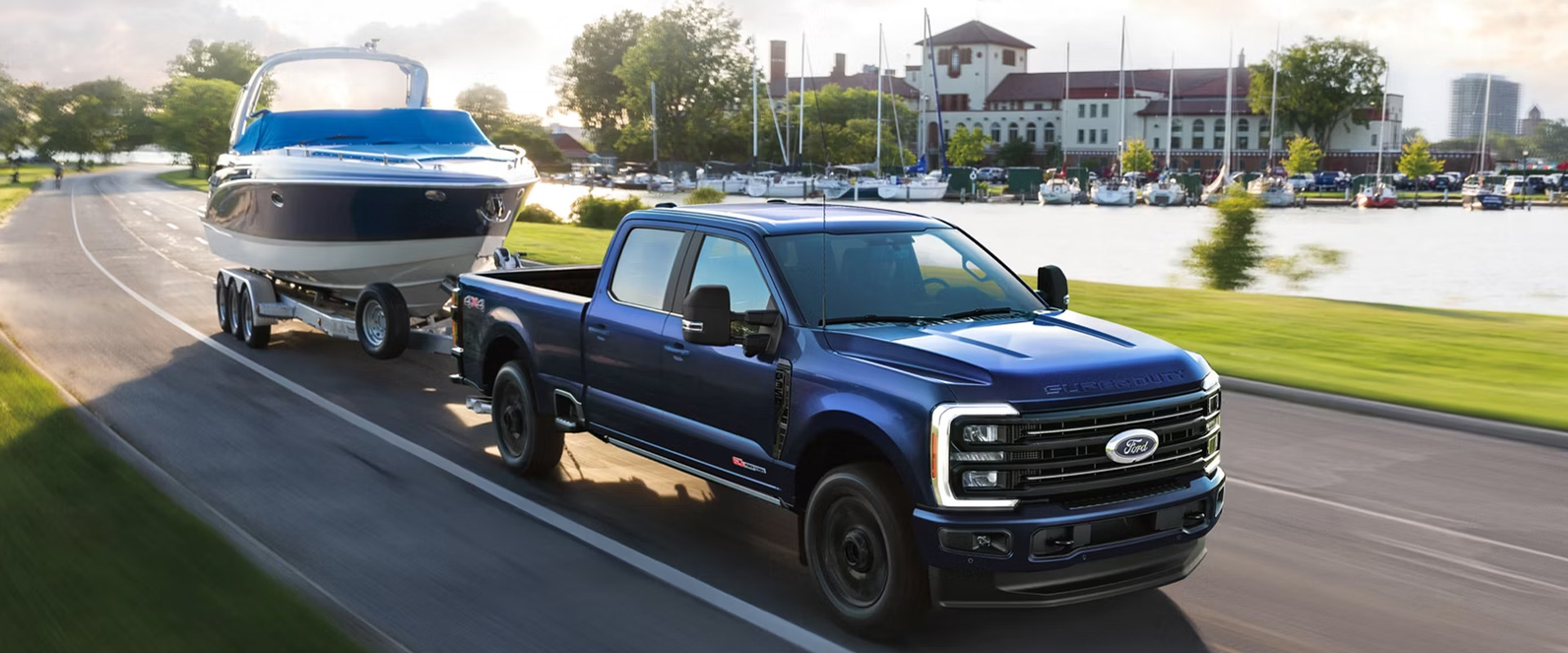
Ford F-250 vs. Ford F-350 ride quality depends less on badge and more on how hard the truck is rated to work. Unloaded, the Ford F-250 often feels easiergoing, while a Ford F-350 with heavier springs or DRW hardware can feel stiffer and busier over rough pavement.
Loaded, the advantage can reverse because the Ford F-350 usually feels more planted and less unsettled. That matters for drivers towing often, since confidence under load is part of ride quality, even if the unloaded truck feels firmer.
What Impacts Ride Quality Most
Tire type, tire pressure, spring rate, wheelbase, and whether the truck is carrying weight influence comfort more than shoppers expect. DRW width and extra unsprung mass also affect road noise, steering feel, and maneuverability in daily use.
Parking ease, turning feel, and tire replacement cost all favor the Ford F-250 for non-commercial owners. That makes it the more livable choice for people who need the capability but still use the truck like a personal vehicle.
Category winner: Ford F-250 — typically the easier daily driver, especially when compared with an F-350 DRW or high-payload setup.
Size, Cab/Bed Options, and Interior
When shoppers compare the Ford F-250 vs. the Ford F-350 in terms of size, they often assume the Ford F-350 is much larger. In reality, a Regular Cab, SuperCab, or Crew Cab Ford F-250 and Ford F-350 with the same bed length are often nearly identical in length and wheelbase, with DRW width creating the biggest visible difference. Interior design, infotainment, seating, and trim content also overlap heavily because trims drive comfort features more than model numbers do. That means the practical difference between these trucks is usually under the skin, not in cabin quality or exterior dimensions.
Ford F-250 vs. Ford F-350 Size: What Actually Changes
Same cab and bed combinations usually mean nearly the same footprint. Payload packages, rear spring setup, and DRW stance often change how the truck behaves more than how large it looks. For buyers worried about family comfort or tech, trim selection matters far more than choosing between a Ford F-250 and a Ford F-350. For buyers worried about garage fit, DRW is the dimension that deserves the closest attention.
Category winner: Tie — dimensions and interior features are largely configuration- and trim-driven rather than model-specific.
Pricing, Ownership Costs, and Resale
The Ford F-350 often costs more, but the typical price gap can be smaller than the jump created by trim, diesel power, towing packages, or 4×4. That means many shoppers over-focus on model number when the real budget swing comes from options and long-term maintenance costs. Ownership costs can rise with diesel service, DEF use, six-tire DRW replacement, and possible insurance or registration differences tied to GVWR class in some states. Resale cuts both ways: the Ford F-350 often holds strong appeal for heavy-haul buyers, while the Ford F-250 usually has broader mainstream demand.
Hidden Costs to Budget For
DRW means six tires, not four, and that alone changes replacement math. Diesel ownership also brings higher maintenance costs in many cases, which only pays back if you actually use the truck’s towing advantage. For buyers who do not need the extra margin, the Ford F-250 is usually the cleaner financial choice. It delivers most of the same Ford Super Duty experience with fewer ownership penalties.
Category winner: Ford F-250 — typically lower entry cost and simpler ownership make it the better value for non-commercial buyers.
About the Ford F-250
The Ford F-250 sits in the sweet spot for buyers who need serious capability without moving fully into payload-focused configurations. It works well for homeowners, contractors, and RV owners who tow moderate-to-heavy loads but do not max out the rear axle every week.
Its strengths are broad trim availability, easier daily driving than a DRW truck, and enough capability for many trailers and jobsite duties. For a mixed-use heavy-duty truck, the Ford F-250 is often the more balanced answer.
About the Ford F-350
The Ford F-350 is the more payload-oriented member of the pair, especially when configured for SRW heavy hauling or DRW maximum stability. It fits buyers who tow heavy fifth-wheel loads, carry a slide-in camper, or run fleet and work applications where capacity margin matters every day. Its key advantage is not cosmetic; it is the ability to support heavier loads with more confidence. That makes the Ford F-350 the better tool for buyers who regularly push the truck’s limits rather than occasionally approaching them.
The Deciding Factors
The smartest choice depends on how much weight reaches the truck itself, not just what the trailer brochure says. If your frame, hitch, and trailer combination places you within roughly 10 to 15 percent of the payload limit, stepping up usually reduces stress and improves control.
Choose the Ford F-250 if:
- You want heavy-duty capability, but do not routinely carry a high bed payload or high fifth-wheel pin weight.
- You prioritize easier parking, garage fit, and a simpler daily-driver experience.
- You want to keep the purchase price and tire costs lower while still towing confidently.
Choose the Ford F-350 if:
- You routinely haul heavy payloads such as a service body, camper, or dense materials.
- You tow a fifth-wheel or gooseneck with high pin weight and want more payload margin.
- You want the option of DRW for the highest tow and haul configurations.
Verdict: Which Ford Super Duty Should You Buy?
For most drivers, the Ford F-250 strikes the perfect balance of power, capability, comfort, and everyday drivability. It’s built to handle serious towing and hauling while offering a smoother ride and a more budget-friendly ownership experience for daily use.
If your work or lifestyle demands maximum payload capacity, greater rear-end stability, or the ability to tow heavy fifth-wheel and gooseneck trailers, the Ford F-350 is the ultimate heavy-duty solution.
Because both trucks share the same rugged Ford Super Duty platform and many premium features, the best choice comes down to how you plan to use your truck. Before making your decision, be sure to consider your trailer type, estimated tongue or pin weight, payload requirements, axle ratio, and available towing packages.
Ready to find the perfect Ford Super Duty model for your needs? Shop the latest Ford F-250 and F-350 inventory today at Portsmouth Ford and let our team help you drive home in the truck built for your workload and lifestyle.
FAQs
Is a Ford F-350 better than a Ford F-250?
For payload, towing stability, and DRW capability, yes. For daily driving and value, many buyers will find the Ford F-250 better.
What is the price difference between a Ford F-250 and a Ford F-350?
It is usually a modest jump for similarly equipped trucks. Trims, diesel versus gas, 4×4, and towing packages often affect price more than the difference between the Ford F-250 and the Ford F-350.
Is a Ford F-350 heavier than a Ford F-250?
Often yes, especially in DRW form. Exact weight depends on engine, cab, bed, drivetrain, and configuration.
Which Ford F-350 should you stay away from?
Avoid any Ford F-350 that does not match your actual payload or hitch needs. On used trucks, maintenance history matters as much as specs, especially on high-mileage diesel models.
Does a Ford F-250 ride better than a Ford F-350?
Often, yes, when unloaded. Under heavy load, the Ford F-350 usually feels more stable and controlled.
What do payload, GVWR, GCWR, and DRW mean?
Payload is how much weight the truck can carry. GVWR is the maximum truck weight, GCWR is the maximum combined truck-and-trailer weight, and DRW means dual rear wheel.
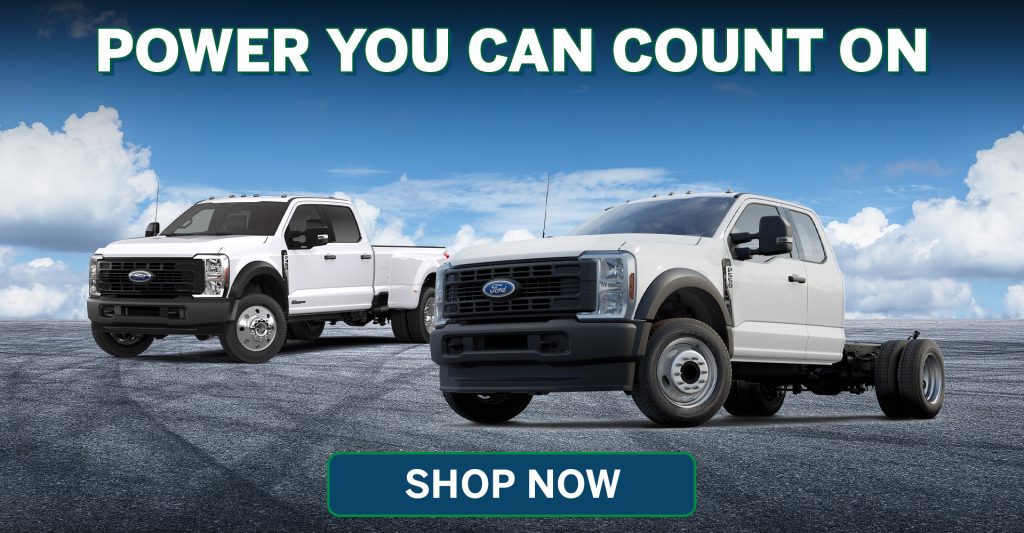
Ford Super Duty or Heavy Duty: What’s Your Workload?
Choosing between the Ford F-450 and Ford F-550 usually means choosing a job profile, not just a badge. In comparing the Ford F-450 vs. Ford F-550, the real split is between a pickup truck built around serious towing capacity and a chassis-cab platform built around payload, body installation, and commercial flexibility.
That distinction matters because conventional towing, 5th-wheel towing, bed payload, wheelbase, and upfit weight all change the answer. This Ford F-450 vs. Ford F-550 comparison from Portsmouth Ford covers specs, payload, towing technology, operating considerations, and work-fit scenarios so business owners, fleet managers, and commercial shoppers can make a clear decision.
Quick Breakdown: Comparing Ford Truck Models
Bottom line:
- Higher commercial payload and upfit headroom: Ford F-550, especially in DRW chassis-cab builds, where GVWR and body-builder flexibility usually matter more than pickup-bed convenience.
- Towing-focused pickup buyers: Ford F-450, which is often the better fit for those prioritizing trailer control, towing technology, and pickup-style use.
- Maneuverability and mixed-use driving: Ford F-450, because many buyers comparing Ford F-450 vs. Ford F-550 want heavy capability without moving fully into a larger commercial-body path.
- Acquisition cost and simpler build-and-price shopping: Ford F-450, since pickup configurations are often easier to evaluate than a chassis cab plus body package.
- Fleet flexibility and body options: Ford F-550, because service, dump, flatbed, and utility applications usually start with a chassis-cab strategy.
What Is the Difference Between These Ford Trucks?
The difference between the Ford F-450 and Ford F-550 comes down to intended use after purchase. The Ford F-450 appeals to buyers who want a towing-capable Ford Super Duty with pickup-like usability, while the Ford F-550 is usually chosen when a commercial body, a higher GVWR class, or specialized equipment is part of the plan.
Both trucks sit in the Ford Super Duty ecosystem, but they solve different problems. A Ford F-450 often supports trailer-focused work with familiar pickup features like a bed and an integrated trailer brake controller, while a Ford F-550 more often starts as a dual-rear-wheel chassis ready for a body installer.
Pickup vs. Chassis Cab: Why It Changes Everything
A chassis cab changes the payload math because frame design, axle rating, and body weight all factor into the final vehicle strategy. Buyers comparing the Ford F-450 vs. Ford F-550 should verify the final upfit weight before assuming the remaining payload. A heavy body can quickly consume capacity, and the wrong starting platform can leave a truck legally loaded but operationally compromised.
Truck Specs and Configurations
Ford F-450 vs. Ford F-550 specs comparisons should start with what Ford actually offers for the specific model year and body style. Engine families can include gas or diesel engines, depending on model, GVWR class, and configuration, while transmission pairing, 4×2 or 4×4 availability, axle ratio, and wheelbase all affect how the truck performs in the field. Cab size and frame length matter as much as engine choice in the Ford F-450 vs. Ford F-550, because they shape turning radius, ride behavior, and body packaging.
Engine and Drivetrain Considerations
Engine availability and output can vary between the Ford F-450 vs. Ford F-550, which matters because axle ratio and drivetrain selection influence grade performance, towing feel, launch under load, and fuel use more than many shoppers expect.
Cab, Wheelbase, and Frame Choices That Affect Real Work Fit
Regular Cab and SuperCab layouts of the Ford F-450 vs. Ford F-550 can improve packaging efficiency when crew size is small, and body length matters. Crew-oriented buyers may prefer more cabin space, but a longer cab can reduce body length options or affect maneuvering in tight service routes.
Wheelbase is not just a measurement on paper. Ford F-450 vs. Ford F-550 chassis-cab layouts often offer more flexibility than a pickup bed when the goal is a crane body, longer flatbed, or service body with organized storage.
Payload and GVWR Reality Check
Ford F-450 vs. Ford F-550 payload comparisons are really GVWR calculations. Payload is calculated by subtracting curb weight, passengers, cargo, upfit weight, fuel, accessories, and tongue weight from the Gross Vehicle Weight Rating, or GVWR. The most accurate reference for determining payload is the specific payload label located on the truck’s door jamb.
In the market, the Ford F-550 chassis cab is often chosen when buyers need more GVWR headroom for commercial bodies and equipment. The Ford F-450 remains an excellent choice when towing is the priority and payload needs are substantial but not dominated by a heavy upfit, and staying within ratings matters for braking, tire loading, and liability.
Towing Focus and Why the Numbers Can Surprise People
Some buyers are surprised to find that the Ford F-450 can outperform the Ford F-550 in towing capacity under certain configurations. This Ford F-450 vs. Ford F-550 discrepancy arises because towing capability is influenced by several factors, including GCWR, hitch design, axle ratio, cooling systems, and wheel and tire configurations. It’s not solely determined by selecting the truck with the higher GVWR.
For those who frequently tow trailers, the Ford F-450 is often a better option for pickup-style towing. In contrast, many Ford F-550 models are designed with a focus on payload, body installation, and specialized vocational equipment, which can result in a design that prioritizes different features over a singular towing statistic.
Category winner: Ford F-450 — For buyers centered on trailer work, pickup-oriented towing configurations often make the Ford F-450 the clearer tool.
Conventional vs. Gooseneck/5th-Wheel: What to Compare
Conventional towing and gooseneck towing should never be treated as the same use case. Hitch type changes stability, load transfer, and rating limits, and high trailer ratings can still be constrained by bed payload or pin weight.
Use the current Ford towing guide and confirm labels on the exact truck. In Ford F-450 vs. Ford F-550 comparisons, the trailer should match the truck’s exact configuration rather than the largest number in a brochure.
Work-Ready Use Cases and Upfit Compatibility
Landscaping, construction, farming, towing services, and municipal fleet operations do not ask the same thing from a Ford F-450 vs. Ford F-550 truck. The Ford F-550 usually fits jobs that need a utility body, stake body, dump body, flatbed, or PTO-related commercial setup, while the Ford F-450 often fits buyers who want serious capability in a less specialized package.
Ford Pro support also matters for commercial planning because ordering, telematics availability, and upfit coordination can influence downtime and deployment. For fleet managers, the Ford F-450 vs. Ford F-550 truck that enters service more quickly and carries the legally required body is often the more profitable choice.
Category winner: Ford F-550 — When the truck must carry a vocational body and equipment every day, the Ford F-550 usually offers a stronger foundation.
Common Upfits That Push Buyers Toward Ford F-550
Service bodies with compressors or generators, dump bodies, heavier flatbeds with tool storage, and some utility crane applications commonly push buyers toward the Ford F-550 vs. F-450. Higher GVWR headroom can preserve usable payload after the body is installed, which is the metric that determines whether the truck stays useful.
Common Scenarios Where the Ford F-450 Makes Sense
The Ford F-450 makes sense for frequent towing in a pickup-style setup, mixed personal and work driving, and buyers who do not need the higher chassis-cab path. The final choice between the Ford F-450 vs. Ford F-550 should still come from the exact payload label and equipment plan, not assumptions based on model name alone.
Ownership Considerations That Affect Total Cost
The operating costs of a Ford F-450 vs. Ford F-550 are influenced more by its load profile than by its brand or model prestige. Key factors like tires, brakes, fuel consumption, diesel exhaust fluid (DEF) for diesel engines, and routine and body maintenance are all affected by the vehicle’s weight, duty cycle, and how frequently it operates close to its maximum capacity.
Additionally, insurance premiums, registration fees, and compliance requirements may vary based on the Ford F-450 vs. Ford F-550 Gross Vehicle Weight Rating (GVWR) classification and the intended business usage. When deciding between models such as the Ford F-450 and Ford F-550, making an informed choice early on is essential. It can help minimize the risk of overloading, reduce the likelihood of premature wear and unscheduled repairs, and ultimately lead to less downtime.
Category winner: Ford F-450 — For many non-fleet buyers, the Ford F-450 can be easier to live with when the job does not require a heavier commercial-body strategy.
Compliance and Weight-Class Considerations (State-Dependent)
A Ford F-450 vs. Ford F-550 fleet buyer should check local rules for commercial plates, inspections, DOT requirements, and weight-class triggers before ordering. That step is operational planning, not legal advice, but it can change the total cost and administrative burden of a truck.
About the Ford F-450
The Ford F-450 stands out in this comparison as a vehicle primarily designed for towing, attracting those who seek substantial capability without diving into a heavier chassis-cab option. It strikes a perfect balance for buyers who require strong towing performance while still prioritizing the versatility of a pickup and ease of maneuvering.
About the Ford F-550
The Ford F-550 is typically the commercial-body platform in the Ford F-450 vs. Ford F-550 matchup. It is commonly selected when payload after upfit, frame flexibility, and higher GVWR classes matter more than having a factory pickup bed.
The Deciding Factors
Choose Ford F-450 if:
- You need frequent heavy towing in a pickup-oriented configuration.
- You want strong capability without maximum chassis-cab GVWR headroom for a heavy upfit.
- Your work includes personal driving, jobsite towing, and tighter-route maneuvering.
- Your crew and equipment plan still fits the truck’s payload label.
- You want to bring your trailer plan to our team for label-based matching.
Choose Ford F-550 if:
- Your build includes a service body, dump body, utility body, or flatbed that will consume a significant payload.
- You need higher GVWR classes commonly used in commercial service.
- You need wheelbase and frame flexibility for upfitting.
- Your operation depends on carrying tools, equipment, and crew every day.
- You want us to review the upfit plan before finalizing the order.
Experience Ford Truck Toughness
For upfit-driven commercial builds, the Ford F-550 is usually the more appropriate recommendation. For tow-driven pickup builds, the Ford F-450 is often the cleaner answer, but the outcome depends on the configuration.
The right process is simple: start with the payload after upfit, confirm the trailer type, then evaluate the cab, wheelbase, and operating costs. That sequence keeps Ford F-450 vs. Ford F-550 decisions grounded in work requirements instead of assumptions.
At Portsmouth Ford, our team can help compare build sheets, GVWR labels, and upfit plans before you commit. Visit us to review current Ford Super Duty options, custom ordering paths, and practical commercial-truck guidance.
How Our Team Helps You Confirm the Right Build
We can review the door-jamb label, axle ratings, and upfit weight estimates so the final truck matches the real job. We also help with custom ordering and commercial-truck planning based on actual work requirements, not generic ratings.
FAQs
What is the weight difference between the Ford F-450 and the Ford F-550?
It depends on cab, drivetrain, body style, and GVWR class. A Ford F-550 chassis cab is typically built in higher GVWR classes, but the exact difference should be confirmed on the build sheet and door-jamb label.
Why can a Ford F-450 tow more than a Ford F-550?
Tow ratings depend on GCWR, axle ratio, hitch type, wheel and tire setup, and engineering focus. Some Ford F-450 configurations are optimized for towing, while many Ford F-550 builds prioritize payload and upfits.
How much weight can a Ford F-450 carry in the bed?
Payload varies widely by configuration and equipment. The most reliable number is the payload figure on the specific truck’s door-jamb label.
What are the pros and cons of buying a Ford F-450?
Pros include strong towing-focused configurations and pickup-style usability for mixed work and personal driving. Limits can include less GVWR headroom for heavy commercial upfits compared with a Ford F-550 chassis cab.
Is a Ford F-550 always the right choice for a higher payload?
Often, but not automatically. Final usable payload depends on the body installed, axle ratings, equipment weight, and the exact truck’s labels, so confirm the exact truck’s labels and towing guide.
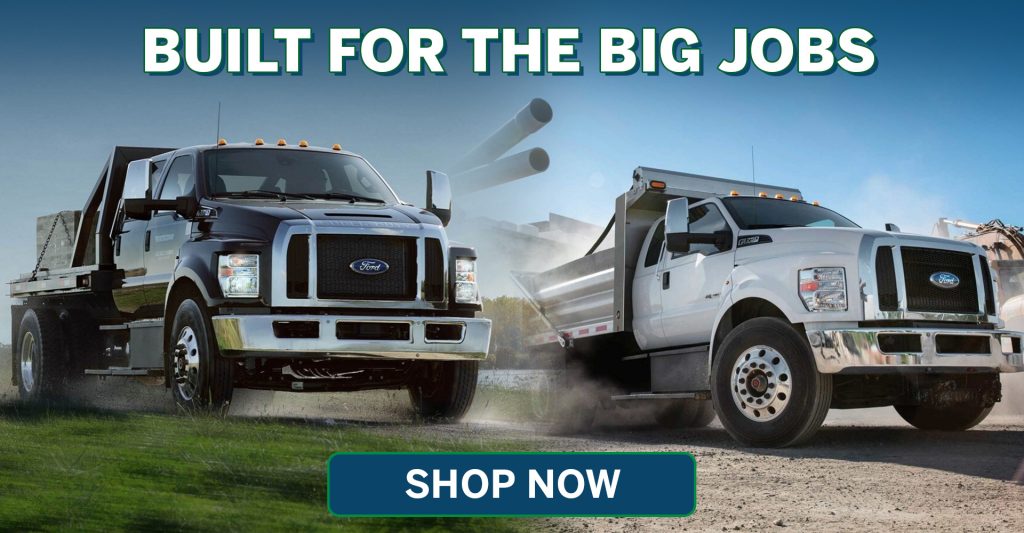
Finding The Right Truck For The Job
Choosing between the Ford F-650 vs. Ford F-750 is not about picking the bigger badge. It is about matching the truck to the job, route, body, payload, and the long-term cost of ownership. For contractors, fleet managers, delivery companies, municipalities, and service teams, the right medium-duty truck can make daily work smoother, safer, and more profitable.
Both Ford Medium Duty trucks can be configured for serious vocational work, but they are not interchangeable in every operation. This comparison from Portsmouth Ford explains where the Ford F-650 fits cleanly, where the Ford F-750 provides the needed margin, and how to spec either truck for compliance, upfit weight, and daily duty cycle.
Bottom line:
- Ford F-650 is the best fit for lighter vocational bodies, tighter urban routes, and operations where maneuverability affects productivity every day.
- Ford F-750 is the best fit for heavier upfits, construction upfits, and jobs that need higher-rated configurations for payload or trailer demands.
- Ford F-650 often makes more sense when a contractor wants medium-duty strength without carrying the cost and complexity of a heavier spec than the route requires.
- Ford F-750 is usually the stronger match for dump, tow, and municipal cycles, where body weight and seasonal load swings reduce spec margin quickly.
- Licensing, insurance, and compliance can change with GVWR and GCWR, so the right winner depends on the exact build, not just starting MSRP.
| Feature / Category | Ford F-650 | Ford F-750 |
|---|---|---|
| Core role | Lighter-to-mid vocational work | Heavier vocational work |
| Typical route fit | Tighter streets, frequent stops | Heavier haul routes, tougher cycles |
| GVWR availability | Up to 29,000 lbs. when properly equipped | Up to 37,000 lbs. when properly equipped |
| Engine options | 7.3L V8 gas engine or 6.7L Power Stroke® Turbo Diesel | 7.3L V8 gas engine or 6.7L Power Stroke® Turbo Diesel |
| Gas engine output | 335 hp, 468 lb.ft. torque | 335 hp, 468 lb.ft. torque |
| Diesel torque ceiling | Varies by calibration, up to 850 lb.ft. torque in listed applications | Varies by calibration, up to 850 lb.ft. torque in listed applications |
| Common body types | Box truck, stake bed, service, utility body | Dump, tow body, municipal, heavier haul bodies |
| Maneuverability | Usually easier to package for tighter access | Usually favors capacity over agility |
| Upfit bias | Right-sized bodies and lower body weight | Heavier bodies and higher-demand equipment |
| CDL requirement | Depends on spec and use | More likely in higher-rated builds, depending on the law |
| Buyer priority | Balance capability with efficiency | Preserve headroom for demanding jobs |
Ford Truck Capability
The Gross Vehicle Weight Rating is the maximum legal operating weight of the truck itself, including the chassis, body, fuel, people, tools, and cargo. The Gross Combined Weight Rating combines the truck and trailer, which is why these ratings affect compliance, body selection, insurance exposure, and whether a promising build becomes overloaded on its busiest day.
Ford lists properly equipped Ford F-650 and Ford F-750 models with up to 37,000 lbs. GVWR and up to 50,000 lbs. GCWR, but that headline number does not eliminate configuration math. Drivers comparing Ford F-650 vs. F-750 should treat those limits as a framework, because the Ford F-650’s payload capacity and the Ford F-750’s towing capacity still vary by wheelbase, axle ratio, engine, body, and trailer setup.
A practical estimate starts with the body, payload, passengers, tools, fuel, trailer tongue weight, and accessories such as liftgates, compressors, or a tow body package. Build the spec sheet around the heaviest legal day on the route, not the average day, because average-day thinking is what creates overloaded axles, shortened brake life, and insurance questions after an incident.
Category winner: Ford F-750 — When capability margin is the deciding factor, the Ford F-750 usually gives heavier vocational buyers more room to spec confidently.
Engines and Power Delivery
The Ford F-650’s engine specs should be reviewed with your actual duty cycle in mind. The available 7.3L V8 gas engine is listed by Ford at 335 hp and 468 lb.ft. torque, while the 6.7L Power Stroke® Turbo Diesel can support higher-torque applications, with Ford listing diesel torque levels up to 850 lb.ft. torque in some applications.
The 7.3L V8 gas engine can be a practical choice for local routes, service calls, delivery work, and operations where acquisition cost and simpler operation matter. The 6.7L Power Stroke® Turbo Diesel is often better suited to frequent towing, heavier loads, long grades, PTO demand, and higher-mileage commercial use.
Ford F-650 vs. F-750 engine shopping is less about which truck has the better engine and more about how the engine, transmission, gearing, and body work together. The TorqShift® heavy-duty transmission helps manage heavy loads, while available PTO and live-drive PTO capabilities can support hydraulics and jobsite equipment needs.
Category winner: Ford F-750 — With heavier-duty use cases more common in its buyer profile, the Ford F-750 benefits more often from diesel torque and towing-oriented spec choices.
Upfit Flexibility and Vocational Fit
Wheelbase, cab-to-axle, frame length, and axle ratio determine whether a body fits correctly and remains stable when loaded. In comparing the Ford F-650 vs. F-750, those dimensions matter because a dump body, crane service body, or municipal applications package can shift weight distribution enough to change the correct chassis choice.
Both trucks can support box, stake, service, utility, landscape, dump, tow, and municipal builds, but the fit differs by body mass and center of gravity. A buyer planning a tall body, dense material loads, or frequent trailer use should prioritize payload distribution and axle loading first, because poor weight balance creates handling problems long before the truck reaches an advertised maximum.
Use an upfit checklist that includes body weight, mounted equipment, hydraulic or PTO requirements, turning-radius needs, jobsite access, and bridge or route restrictions. This is where the Ford F-650 often wins for lighter bodies and tighter access, while the Ford F-750 becomes more persuasive when the upfit itself consumes a large share of available weight.
Category winner: Ford F-750 — For heavier vocational bodies and more demanding upfit combinations, the Ford F-750 usually offers the cleaner spec path.
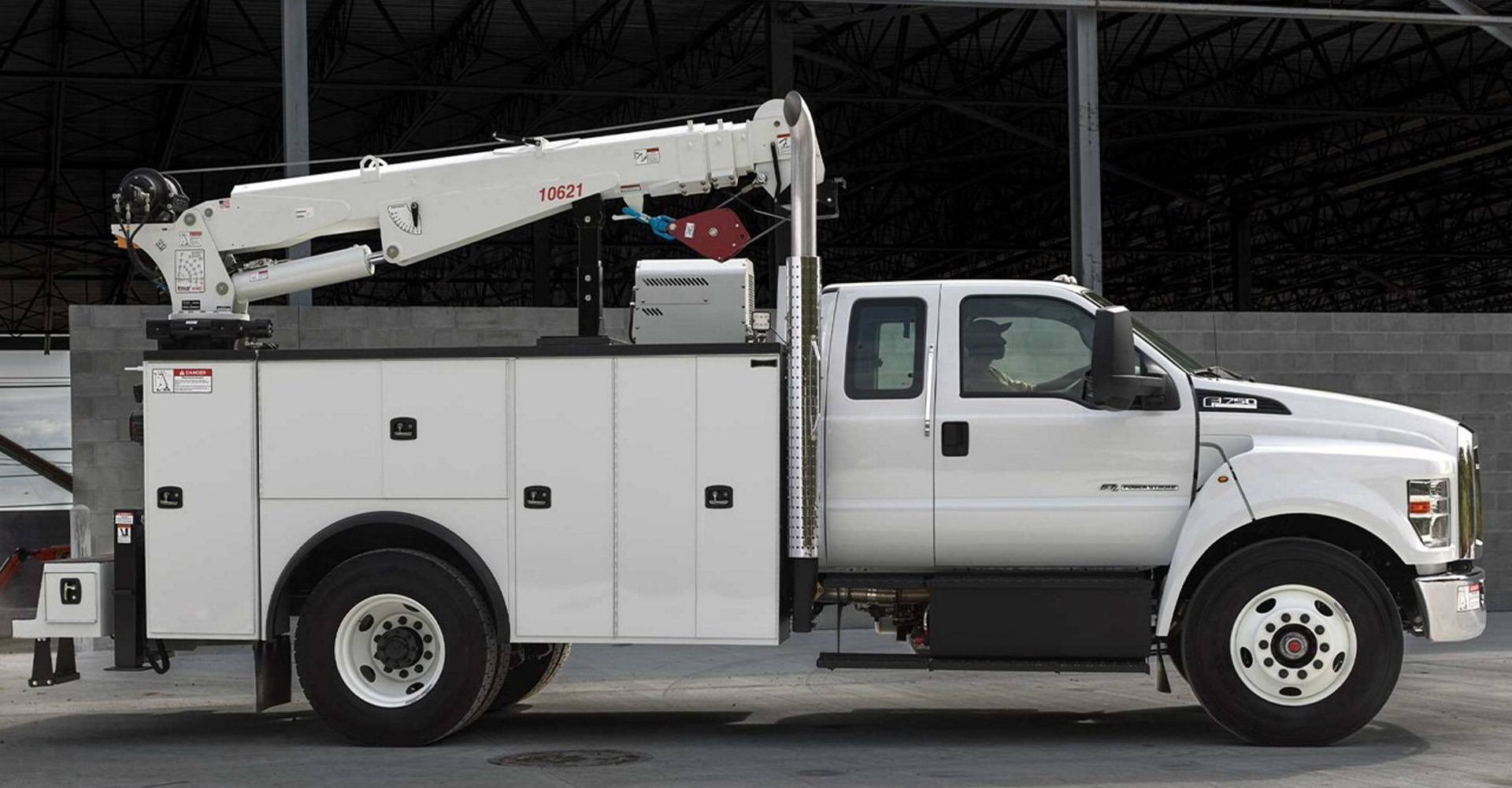
Safety and Driver Tech
Medium-duty trucks spend long hours in real traffic, on tight jobsites, in loading areas, and in municipal spaces. Ford Co-Pilot360® technology can help support driver awareness, while Ford also notes that available driver-assist features on Ford F-650 and Ford F-750 models include Automatic Emergency Braking, Lane-Keeping Alert, Adaptive Cruise Control, and Forward Collision Warning.
In Ford F-650 vs. F-750 shopping, driver confidence should be part of the conversation. A Ford F-650 may be easier to manage on tight delivery routes, while a Ford F-750 may give drivers more confidence when the truck is built for heavier, more demanding work. Mirrors, cameras, body visibility, turning radius, braking setup, and driver training can be just as important as power.
Category winner: Ford F-650 — In fleets where tighter routes and frequent stops drive incident risk, the Ford F-650 usually gains the most from its easier-to-manage footprint.
Maneuverability and Route Fit
Higher capacity usually brings longer wheelbases, heavier axle configurations, and a larger operating footprint, so route fit is never a minor detail. The Ford F-650 generally suits tight residential work, downtown deliveries, alley backing, and fenced jobsite access more naturally, while the Ford F-750 often accepts those constraints only if the workload truly requires the added headroom.
Ask two questions before finalizing a spec: what is the tightest turn on the regular route, and how often does the truck back into confined spaces? Those answers often decide Ford F-650 vs. F-750 faster than headline ratings do, because a truck that cannot enter the site efficiently turns capacity into idle time.
Construction access roads and transfer-station runs can justify the Ford F-750 if loads stay heavy and repetitive. Frequent curbside stops, service dispatches, and compact loading zones usually point toward the Ford F-650.
Category winner: Ford F-650 — For maneuverability, parking, and daily access constraints, the Ford F-650 is usually the more practical tool.
Reliability and Maintenance
The typical discussion of “common problems” in trucks often focuses less on the flaws of a specific model and more on whether the truck is well-suited to its intended use. Issues such as brake wear, tire performance, cooling systems, DEF systems in diesel models, PTO components, hydraulics, and electrical connections for upfits are the factors that most frequently contribute to downtime in vocational trucks.
Maintenance intervals should take into account factors such as route severity, idling time, payload consistency, and seasonal demands. For example, a truck that transports mulch in the spring and salt in the winter will experience less wear and tear than a truck that operates with a light service body year-round.
Standardizing consumables and common parts across the fleet reduces downtime and purchasing friction. In Ford F-650 vs. F-750 ownership, the lower-risk truck is usually the one that was not overspec’d or underspec’d for the work.
Category winner: Ford F-650 — When the job does not require the heavier chassis, the Ford F-650 often keeps maintenance and operating complexity more manageable.
Dump Bodies and Heavy Vocational Builds
Ford F-750 dump truck specs depend on the chassis, wheelbase, cab-to-axle measurement, axle ratio, frame length, hydraulics, dump body, PTO requirements, and material weight. A dump truck used for mulch, brush, and lighter landscape material does not face the same stress as one hauling stone, asphalt, debris, or municipal road materials.
A Ford F-750 dump body build can be a strong option for contractors, road crews, municipalities, and construction teams that need higher capacity and durability. However, the right build should be planned before the truck is ordered. Hydraulics, PTO needs, body height, loading equipment, air brakes, and axle placement can all affect the final result.
In a Ford F-650 vs. F-750 decision, the Ford F-750 becomes more persuasive when the upfit itself is heavy. If the body, equipment, and expected payload push the Ford F-650 to its limits, the Ford F-750 may offer a better long-term solution.
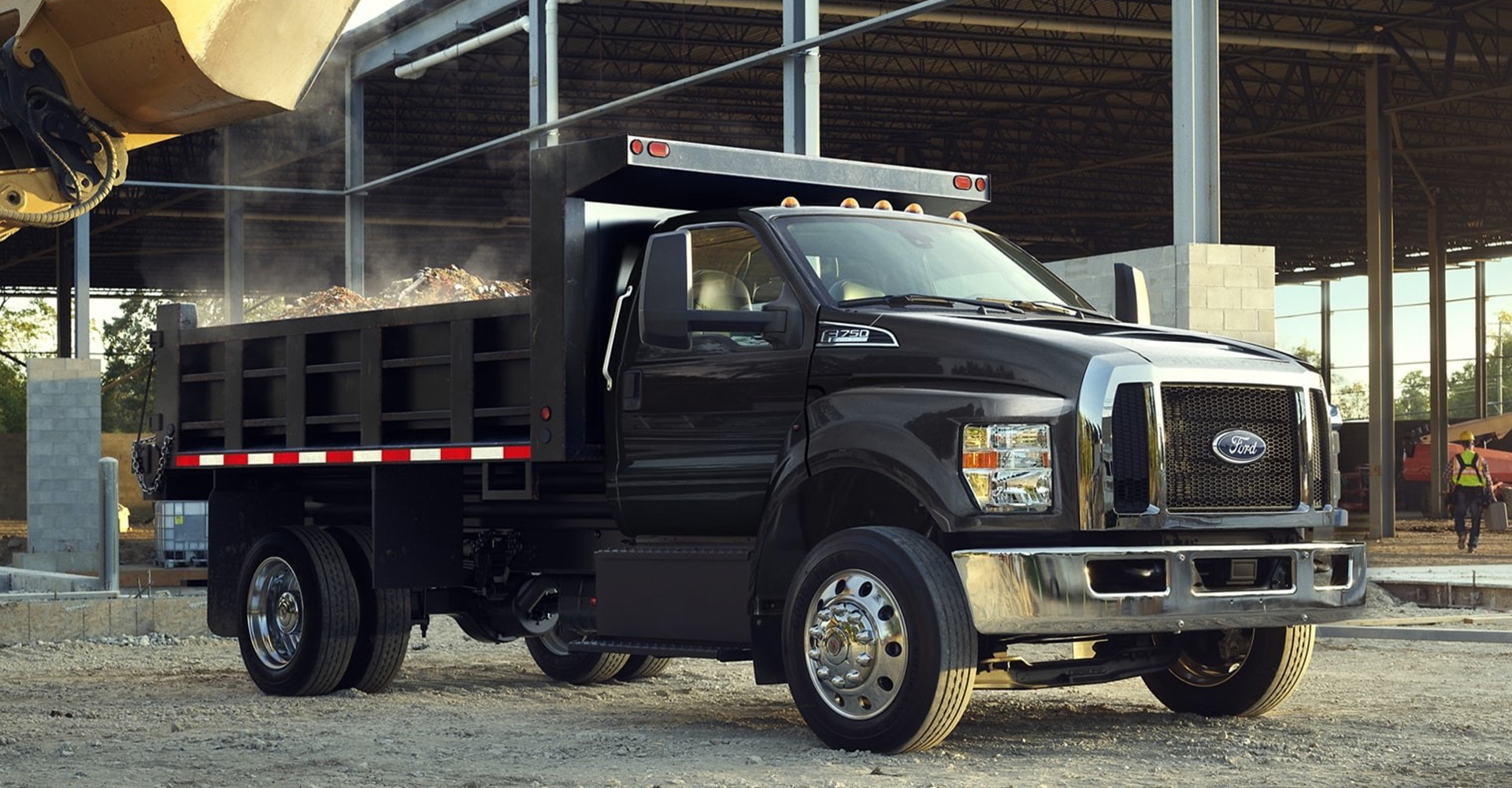
When to Choose the Ford F-650 or the Ford F-750
Choose Ford F-650 if:
- You run delivery, service, or landscape routes where maneuverability and frequent stops matter.
- Your body and payload targets fit comfortably without needing the highest GVWR configurations.
- You want medium-duty capability aligned to the duty cycle rather than extra chassis you may not use.
- You are planning a box, stake, or service body where overall length and access are daily constraints.
Choose Ford F-750 if:
- You expect heavier vocational bodies or consistently higher payload demands.
- You tow frequently or need more margin for trailer weight, grades, and long-haul stability.
- You are building a dump, tow, or construction-focused configuration where spec headroom matters.
- Your operation benefits from higher-rated configurations to handle seasonal peaks and job changes.
CDL requirements depend on GVWR, GCWR, local law, and use case, so compliance should be confirmed before ordering. In Ford F-650 vs. F-750 decisions, legal fit is as important as mechanical fit.
Find Your Powerful Pickup at Portsmouth Ford
Portsmouth Ford in Portsmouth, NH, is a smart place to start if your business is comparing Ford F-650 vs. F-750 options for commercial use. Instead of guessing your way through starting MSRP, payload, towing, and upfit questions, you can work with a Ford dealership that understands commercial truck shopping and the importance of building around the actual job.
Whether you need a Ford F-650 for a delivery route, a Ford F-750 for heavier vocational work, or help comparing Ford F-650 vs. Ford F-750 options for your fleet, Portsmouth Ford can help you shop with confidence. Bring your body requirements, expected payload, towing needs, duty cycle, route details, and equipment list so the team can help you find a truck that works as hard as your business does.
FAQs
Is the Ford F-650 considered a medium-duty truck?
Yes. The Ford F-650 is commonly classified as a medium-duty commercial truck, with final class depending on the GVWR configuration you select.
What is the difference between the Ford F-650 and Ford F-750?
In most builds, the Ford F-750 supports heavier vocational upfits and higher-rated use cases. The Ford F-650 often fits lighter-to-mid-duty bodies where maneuverability and right-sizing matter more.
What are the common problems with a Ford F-650?
Most concerns are maintenance-related, including brake and tire wear, upfit electrical connections, and diesel emissions-system upkeep on diesel builds. A truck matched to the job and serviced on schedule usually has fewer downtime issues.
Do I need a CDL for a Ford F-750?
Sometimes. CDL requirements depend on GVWR, GCWR, state rules, and how the truck is used, so confirm compliance from the exact specs.
Which engine is better for Ford F-650 vs. F-750: gas or diesel?
It depends on duty cycle. The 7.3L gas V8 often suits local stop-and-go work, while the 6.7L Power Stroke® Turbo Diesel is often chosen for frequent towing, heavy loads, and sustained grade work.
Finding the Perfect Ford Super Duty Fit
Buying a heavy-duty pickup can get difficult when your trailer, payload, and daily route start pulling in different directions. For shoppers comparing the Ford F-350 vs. F-450, the real answer depends less on bragging rights and more on how often you tow heavy, how much weight sits in the bed, and how tight your worksites or campgrounds are.
Within the Ford Super Duty lineup, the Ford F-350 and Ford F-450 can look close on paper but behave differently in real use. In this guide from Portsmouth Ford, we’ll break down the differences between the Ford F-350 and F-450 in practical terms so contractors, farmers, RV owners, and equipment haulers can match the truck to the job rather than chase the highest number in the Ford F-Series lineup.
What Is The Difference Between the Ford F-350 and Ford F-450?
About the Ford F-350
The Ford F-350 sits at the versatile center of the Ford Super Duty lineup. It serves buyers who need serious towing capacity and payload without moving immediately into a more towing-specialized truck.
Its real strength is range. With SRW and DRW options, multiple cab configurations, different bed length combinations, available diesel engine power, and modern trailering tech, the Ford F-350 often serves as the practical ceiling for contractors, RV owners, and farmers who need capability but still care about daily drivability.
About the Ford F-450
The Ford F-450 is the towing-focused pickup step for buyers who want more control with larger trailers. It is still a pickup in the Ford Super Duty lineup, even though its capability overlaps with some medium-duty truck use cases and can change how buyers think about trailer size and job planning.
Its real-world appeal comes from confidence. For equipment haulers, large fifth-wheel owners, and drivers who spend long days towing in wind, on grades, and in tight spaces, the Ford F-450 will feel less strained and easier to place than its size suggests.
Towing and Trailer Control
The biggest reason shoppers compare the Ford F-350 vs. the F-450 is towing. Cab configuration, bed length, wheelbase, 4×4, axle ratio, engine choice, and hitch type all affect the final Ford F-350 vs. F-450 towing capacity rating. A gooseneck or fifth-wheel trailer changes the decision because the pin weight transfers a substantial load onto the truck itself. The Ford F-450 is often chosen when towing is not occasional but routine, especially for large RVs, enclosed equipment trailers, and repeated long-distance pulls where steering confidence and trailer stability reduce driver fatigue.
For heavy but not constant max-stress equipment or dump trailers, a properly configured Ford F-350 often makes more financial and practical sense, and can handle towing up to 38,000 lbs. For large fifth-wheel RVs, repeated mountain grades, crosswinds, and tight campground turns, the Ford F-450 usually feels more composed because it’s built with a towing-first mindset and can tow up to 40,000 lbs.
Fifth-Wheel and Gooseneck Use Cases
A Ford F-350 Dually is often enough when the trailer is heavy, but the owner also needs strong bed payload headroom for tools, fuel, or job materials. That balance matters to contractors and farmers who do not want every truck decision optimized solely around the trailer.
A Ford F-450 makes more sense when heavy-pinned weight towing is common, and maneuvering is part of the workload, not an occasional inconvenience. Long gooseneck-trailer days reveal small differences in steering, stability, and control, and those differences become costly when the truck is used for revenue work.
Trailering Tech That Reduces Stress
The Ford Super Duty can be equipped with useful towing aids, including Pro Trailer Hitch Assist™ and Ford Co-Pilot360®. These systems matter most when the trailer is large enough that small alignment mistakes, lane drift, or poor visibility create real risk. While some automated trailer features can have their quirks, Pro Trailer Hitch Assist significantly enhances the towing experience. When the trailer setup is consistent and sensors are unobstructed, this technology can really shine. It simplifies the process, allowing drivers to focus more on what matters most: achieving accurate trailer setup and ensuring the right tongue weight. With Pro Trailer Hitch Assist, drivers can enjoy greater ease and confidence while towing, making the whole experience smoother and more accessible.
The category winner for towing and trailer control is the Ford F-450. Frequent heavy towing highlights the Ford F-450’s control, maneuverability, and towing-oriented design.
Payload and Bed Work
Payload means everything carried by the truck, including passengers, tools, hitch hardware, fuel, aftermarket accessories, and any pin weight or tongue weight pressing down from the trailer. Many buyers overestimate what they can haul because they focus on towing capacity while ignoring how quickly real-world payload disappears.
This is where the Ford F-350 vs. F-450 becomes less intuitive, as both provide up to 14,000 lbs. GVWR. Depending on configuration, the Ford F-350 can be the sharper choice for bed-focused work because payload-oriented builds may leave more usable room for pallets, salt spreaders, toolboxes, skid steer attachments, or auxiliary tanks without shifting into a more specialized towing setup. For a service truck, farm truck, or mixed contractor use, that flexibility matters. A truck that tows well but runs out of payload after adding crew members, a hitch, and job equipment is not actually sized correctly for the work.
For buyers who carry serious weight in the bed as well as tow, the Ford F-350 often delivers the more useful payload-focused balance.
Maneuverability and Turning
Many buyers are surprised that a Ford F-450 can turn tighter than a Ford F-350 in many configurations. The reason is not magic but hardware: the Ford F-450 often uses a wide-track front axle and steering geometry designed to improve the truck’s turning radius despite its larger, towing-focused footprint.
That difference shows up at crowded fuel stations, on older town streets, at jobsite gates, and in campgrounds where a long trailer punishes every extra correction. A tighter turning circle can reduce multi-point turns, lower stress, and shorten the time spent blocking traffic while backing a trailer into place. The tradeoff is that bigger hardware and a wider stance can add cost and complexity. Parking ease, tire wear, and tire replacement cost can all lean less favorably toward the Ford F-450 when the truck is used more as a commuter vehicle than as a tow rig.
Where Tighter Turning Actually Matters
Tighter turning matters most in equipment yards, narrow rural lanes, storage lots, and crowded campgrounds. These are the places where trailer length magnifies every steering limitation. For long gooseneck trailer and fifth-wheel trailer users, fewer corrections can also reduce fatigue. Over a full season of towing, easier maneuvering is not just convenience but a productivity advantage.
The Ford F-450’s turning advantage is one of the clearest real-world reasons to move up when towing large trailers and space is tight.
Ride Quality and Daily Driving
The Ford F-350 vs. F-450 ride quality depends heavily on load, tire construction, and suspension tuning. Both are heavy-duty pickups, so unloaded ride comfort won’t feel like a midsize SUV, but the Ford F-350 usually fits daily driving more naturally.
A single-rear-wheel Ford F-350 is often the least disruptive choice for commuting, errands, school runs, and parking lots. Even a Ford F-350 Dually can feel easier to live with than a Ford F-450 when the truck spends more time empty than towing.
The Ford F-450 tends to feel most at home under load, where its design priorities make more sense. A truck optimized for heavy trailer control can feel less relaxed in routine suburban use, which is why honest self-assessment matters more than capability envy.
For daily driving, mixed errands, and less specialized ownership, the Ford F-350 is usually the easier truck to live with.
Fuel Economy and Range
Ford F-350 vs. F-450 fuel mileage should be treated qualitatively because mileage changes with axle ratio, tire selection, speed, terrain, wind, and load. The 6.7L Power Stroke® Diesel V8, rated at up to 1,050 lb.-ft. of torque in certain Ford Super Duty applications delivers serious pulling power, but heavy-duty capability always comes at the expense of efficiency.
The Ford F-450’s heavier-duty components, wider front axle, and tire choices can affect fuel consumption and range. That does not automatically make it the wrong truck, but it does mean owners should plan fuel stops around towing days, not around empty commuting habits.
The trailer’s frontal area often affects range more than buyers expect. A tall enclosed trailer or large fifth-wheel can punish fuel use far more than a modest open equipment trailer, even when scale weight looks manageable.
What Impacts Mileage Most When Towing
Speed, terrain, wind, and trailer shape are usually the biggest mileage variables. Axle ratio and tire selection also matter because they change engine operating range and rolling resistance.
In most comparable real-world use, the Ford F-350 is the more efficient and less costly truck to feed.
Work Configurations, Upfits, and Fleet Fit
For upfit work, the right answer depends on GVWR, axle ratings, and what the truck must carry before a trailer is even attached. Service body, flatbed, dump insert, plow, and auxiliary fuel system installations all change the weight distribution, so the truck should be chosen based on the final working build, not the stock truck on the lot.
This is where many Maine buyers around Portsmouth, Exeter, Dover, and Concord ask the right question: should the truck fit today’s work or next year’s growth? For mixed seasonal demands such as landscaping in spring, towing equipment in summer, and snow work in winter, the Ford F-350 often fits a broader range of jobs without overcommitting to one specialty.
The Ford F-450 becomes more compelling when the fleet role is trailer-heavy and repetitive. Hotshot-style hauling, large equipment moves, and frequent heavy RV towing reward the Ford F-450’s stability and maneuvering edge more than a mixed contractor schedule would. For broader upfit flexibility and mixed fleet use, the Ford F-350 usually fits more jobs with fewer compromises.
Key Considerations for Your Needs
When choosing between the Ford F-350 and the Ford F-450, the decision ultimately comes down to your specific needs. The Ford F-350 stands out for most mixed-use owners, offering superior configuration flexibility, easier daily drivability, and robust payload-centric builds. On the other hand, if frequent heavy towing is a priority, the Ford F-450 excels with its towing-focused setup, enhanced steering geometry, and wide-track front axle, enabling better control when towing large trailers.
For those comparing a Ford F-350 Dually vs. a Ford F-450, the choice typically boils down to payload needs versus the need to tow heavy fifth-wheel or gooseneck trailers. It’s also important to consider running costs, as the Ford F-450 may incur higher tire replacement expenses and require a more specialized ownership profile. Starting your comparison with the payload sticker on your door jamb, the loaded weight of your trailer, and your monthly towing frequency will lead you to the most informed decision.
Which Model Should You Choose?
Our team’s conversations with serious truck shoppers often circle the same issue: when does moving up in capability actually improve the job, and when does it just make daily life harder? The Ford F-350 vs. F-450 debate is usually resolved by looking at trailer frequency, not just trailer size, and by comparing a workday with a non-workday.
Choose Ford F-350 if:
- You need a balanced mix of payload and towing for construction, agriculture, or mixed contractor work.
- You want SRW or DRW flexibility and a truck that is easier to park and use daily.
- You are comparing F-350 Dually vs. F-450 because your trailer is heavy, but bed cargo and daily drivability still matter.
Choose Ford F-450 if:
- You tow large fifth-wheel or gooseneck trailer loads frequently and want more control.
- You regularly maneuver long trailers through tight yards, campgrounds, or job sites.
- You are planning for workload growth in which repeated heavy towing will become the norm, not the exception.
Which Ford Super Duty Fits Your Work?
For most mixed-use owners, the Ford F-350 is the smarter recommendation because it covers more real-world jobs without becoming unnecessarily specialized. For frequent heavy-tow users, especially those hauling large RVs or equipment trailers through tight spaces, the Ford F-450 earns its place with better trailer-focused confidence and maneuverability.
The right answer still comes down to the exact truck, not just the badge. Bring your trailer GVWR, estimated loaded weight, hitch type, typical cargo list, and towing frequency when comparing builds, and our team at Portsmouth Ford can help shoppers from Portsmouth, Exeter, Dover, and Concord, as well as nearby Maine communities, sort through Ford Super Duty capability and available models.
FAQs
Do Ford F-450 trucks turn better than Ford F-350 trucks?
Often, yes. Many Ford F-450 configurations use a wide-track front axle and steering geometry that can produce a tighter turning circle, which helps with large trailers in tight spaces.
Which Ford F-350 should I stay away from?
Avoid any Ford F-350 that does not match your actual workload or lacks documented maintenance. Check the door-jamb payload sticker, hitch setup, axle ratio, and signs of heavy towing wear before deciding.
Is a Ford F-450 considered a medium-duty truck?
The Ford F-450, in pickup form, is generally considered a heavy-duty pickup within the Ford Super Duty family. Its capabilities can overlap with those of medium-duty trucks, but classification can vary by GVWR and registration rules.
Is the Ford F-450 better for towing than the Ford F-350?
For frequent heavy towing, many buyers prefer the Ford F-450 because it is optimized for control and maneuverability. Exact towing capacity still depends on configuration, so compare the towing guide and the real loaded trailer weight.
Employee Pricing For All
AMERICAN VALUE. FOR AMERICAN VALUES.
Ford has spent more than 120 years helping move America forward, earning its place on roads, job sites, driveways, and in family memories across the country. Now named the Most Iconic Company in America by TIME and Statista, Ford is celebrating that legacy as the nation approaches its 250th birthday with the AMERICAN VALUE. FOR AMERICAN VALUES. Employee Pricing Event.
Portsmouth Ford in Portsmouth, NH, is proud to participate in this limited-time event, giving eligible shoppers access to Employee Pricing on select eligible new Ford vehicles. It’s a meaningful opportunity to upgrade with confidence, enjoy real value, and drive home in a Ford vehicle that fits your way of life.
Employee Pricing For A Limited Time
For a limited time, eligible shoppers can take advantage of Employee Pricing on select eligible new Ford vehicles at Portsmouth Ford during the AMERICAN VALUE. FOR AMERICAN VALUES. Employee Pricing Event. This national Ford event celebrates the values that have shaped the Ford legacy for generations: hard work, craftsmanship, dependability, innovation, and a lasting commitment to communities across America.
Ford has long been part of the American story, helping drivers show up for the workday, the school run, the family trip, the growing business, and everything in between. Today, that same purpose continues across a lineup of capable Ford trucks, versatile Ford SUVs, hardworking Ford vans, performance vehicles, and electric vehicles designed for the way Americans drive.
Employee Pricing Made Simple
The AMERICAN VALUE. FOR AMERICAN VALUES. Employee Pricing Event is a national Ford program available through participating dealers from May 1, 2026, through July 6, 2026. During this event, eligible customers can receive Employee Pricing on select eligible new Ford vehicles.
Eligible vehicles may include select new 2025 and 2026 Ford models, such as the Ford Mustang, Ford Mustang Dark Horse, Ford Mustang Mach-E, Ford Bronco Sport, Ford Bronco, Ford Expedition, Ford Maverick, Ford Ranger, Ford F-150, Ford Transit Van, Ford E-Transit, Ford Bronco Raptor, Ford Bronco Stroppe Edition, Ford F-150 Lightning, Ford Super Duty, Ford Escape, and Ford Explorer. Eligibility varies by model year, trim, delivery type, availability, and program rules, and some specialty vehicles are excluded.
Our team at Portsmouth Ford can help you confirm which vehicles in our inventory qualify, review current pricing, and walk you through your options.
Shop AMERICAN VALUE. FOR AMERICAN VALUES. in Portsmouth, NH
Ford vehicles are woven into the daily lives of drivers across the country, from work sites and school drop-offs to road trips, errands, and weekend escapes. Here in the Seacoast region, Portsmouth Ford is proud to help drivers from Portsmouth, Exeter, Londonderry, Manchester, and surrounding Rockingham County communities find dependable Ford vehicles that fit their lives.
Whether you’re interested in a capable Ford F-150, a versatile Ford Explorer, an adventure-ready Ford Bronco Sport, an efficient Ford Mustang Mach-E, a practical Ford Maverick, or another eligible new Ford vehicle, this event gives you a timely reason to shop.
Why Shop With Portsmouth Ford?
At Portsmouth Ford, we believe the right dealership experience should feel clear, helpful, and easy from the start. Our team is here to provide upfront guidance, answer your questions, and help you compare eligible Ford models with confidence.
During the AMERICAN VALUE. FOR AMERICAN VALUES. Employee Pricing Event, you can shop online or visit our dealership in Portsmouth, NH, to explore qualifying new Ford inventory. We’ll help you understand Employee Pricing, review available incentives, and find a vehicle that makes sense for your lifestyle, your business, and your budget. When you shop with Portsmouth Ford, you’re working with a local dealership that values honesty, hospitality, and doing right by our customers.
Shop the Event Before It Ends July 6, 2026
The AMERICAN VALUE. FOR AMERICAN VALUES. Employee Pricing Event is only available for a limited time, from May 1, 2026, through July 6, 2026. Inventory and eligibility may vary, so now is the time to explore your options.
Visit Portsmouth Ford in Portsmouth, NH, give us a call, or browse our new Ford inventory online today. However you choose to shop, our team is ready to help you take advantage of Employee Pricing on select eligible new Ford vehicles during this limited-time Ford event.
New Car Incentives: How To Save

Decoding Dealer Incentives
Shopping for a new vehicle often feels simple until the pricing breaks down into rebates, APR offers, lease ads, and dealer discounts. For many buyers, understanding new car incentives is what turns a confusing ad into a smart purchase decision.
The right offer can lower your out-the-door price, reduce your monthly payment, or cut thousands in interest over the loan term. This guide explains how dealer incentives work, who qualifies, where to find current vehicle specials, and how to compare deals without missing the fine print. Learn more at Portsmouth Ford and browse our current specials online today!
What New Car Incentives Are and Why They Matter
A new-car incentive is an offer that reduces the cost of buying or leasing a vehicle. It may come directly from the automaker, a captive finance company, or from our dealership.
These offers usually appear as cash rebates, customer cash, bonus cash, APR financing, or lease specials. Some reduce the selling price directly, while others lower borrowing costs or create a more attractive advertised payment.
The difference matters because each incentive changes the deal in a different way. A factory rebate cuts the price, promotional APR reduces interest, and dealer incentives may add a local discount based on inventory clearance goals.
Incentives become especially important when MSRP rises, rates change, or supply tightens. A strong offer can make a Ford much more competitive from one month to the next.
Common Types of Vehicle Specials
Shoppers will often see customer cash, bonus cash, low APR financing, lease deals, loyalty offers, conquest offers, military rebates, and college graduate programs. Each one affects total cost, monthly payment, and eligibility requirements.
How Manufacturer Incentives Differ From Dealer Incentives
A manufacturer incentive usually comes from the automaker or its captive finance arm. These programs often include a factory rebate, special APR cash, special lease cash, or a national finance promotion for well-qualified buyers. Dealer incentives differ because they are set locally by each store. A dealer discount may reflect inventory levels, sales targets, aging stock, or a desire to beat nearby competitors on the same model. Regional offer structures also matter. A ZIP code offer can change what you see online, which is why one store may advertise a stronger deal than another on an identical vehicle trim.
Factory Offers vs. Local Dealer Specials
Factory incentives come directly from the manufacturer and are often available nationwide, while regional programs may vary by market. Our dealership also offers local specials based on inventory and seasonal promotions. In many cases, these dealer discounts can be combined with manufacturer incentives, and our team will help you identify the best combination to maximize your savings.
The Main Types of New Car Incentives You Will See
Most new vehicle specials fall into a few familiar categories. The key is knowing whether the offer lowers the purchase price, reduces finance charges, or simply changes the payment structure. Some incentives can be combined, while others are mutually exclusive. A buyer may have to choose between a cash rebate and a promotional APR, especially when 0% APR financing is involved.
Cash Rebates and Customer Cash
A cash rebate is a direct discount applied to the transaction. Customer cash, factory rebate, and bonus cash all reduce the amount financed or the final purchase price. Variations include loyalty rebate offers for current owners and conquest cash for buyers switching brands. These can be valuable, but they often require proof of current registration or ownership.
Low and 0% APR Financing Offers
APR financing promotions reduce the loan’s interest rate. A low rate or 0% APR financing can save a buyer more than a rebate when the loan amount is large and the term is long. These deals usually require strong credit scores and lender approval. In many cases, only well-qualified buyers receive the advertised rate.
Lease Specials
A lease special promotes a low monthly payment for a set term. The ad may look attractive, but it often includes a required down payment, mileage limits, and fees due at signing. Buyers should compare the total lease cost, not only the payment. Lease cash and special lease cash can improve the deal, but they do not erase end-of-lease obligations.
Targeted Incentives
Targeted programs include a military rebate, a first responder discount, a college graduate rebate, and mobility assistance. These offers require proof of eligibility and may be limited to certain models or financing methods.
How to Read a Vehicle Special Without Missing the Fine Print
The headline number in a vehicle ad rarely tells the full story. Fine print explains the expiration date, model year, vehicle trim eligibility, financing assumptions, and whether the offer applies only at participating stores. It is also important to check whether promotions are stackable incentives or an either-or choice. That single detail can change the deal’s real value by a wide margin.
Important Fine-Print Terms to Check
Review residency restrictions, ZIP code targeting, credit tier rules, down payment assumptions, and dealer participation language. Also, confirm whether the ad applies to the exact trim, drivetrain, and model year you want.
Rebate or Low APR Financing: Which Incentive Saves More
At our dealership, we help customers look beyond the monthly payment and focus on what really matters: the total amount paid over time.
Some offers include a larger cash rebate, which immediately lowers the amount you finance. Others feature a low promotional APR, which reduces the interest you pay throughout the life of the loan. Both can be valuable, but the better choice depends on several factors, including your loan term, credit profile, amount financed, and current bank or credit union market rates.
For example, if you secure a short-term loan or a competitive rate through outside financing, the rebate may deliver greater overall savings. In other cases, the low APR option may reduce the total cost of the loan.
That’s where our team comes in. We’ll walk you through both options and help you compare them clearly so you can see which path saves you more. You can also use our online auto loan calculator to enter the vehicle price, rebate amount, APR, and loan term to view the total cost side-by-side.
Our goal is simple: help you choose the incentive that truly saves you the most.
When a Rebate Makes More Sense
A rebate often wins when the cash discount is large and outside financing is already competitive. It can also be better for buyers who make a larger down payment or use a strong trade-in value to reduce the balance.
When Promotional APR Makes More Sense
A promotional APR can be more favorable when you finance a large amount over a long period. On expensive SUVs, trucks, and EVs, 0% APR financing or a very low rate may beat a modest rebate by a wide margin.
How Lease Incentives Work
Lease incentives are built around several moving parts, not just the advertised payment. The most important factors are the money factor, residual value, cap cost reduction, lease term, and any lease cash applied to the deal.
A high residual value usually lowers the monthly payment because the vehicle is expected to retain more value. A lower money factor also helps, since it reduces the finance charge in the lease calculation.
Many low-payment ads require a significant cash down payment at signing. That cap cost reduction may make the monthly number look better, but it increases your upfront cost and can hide the real value of the lease special.
Lease Terms That Affect Real Cost
Check the mileage allowance, acquisition fee, wear-and-tear standards, and disposition fee. Also review what happens at lease end, including excess mileage charges and any purchase option terms.
Who Qualifies for New Car Incentives
Not every offer is open to every shopper. Many incentives depend on credit score, lender approval, current brand ownership, military status, student status, employment, or geographic location.
That is why two buyers can ask about the same make and model and receive different pricing. One may qualify for loyalty or conquest programs, while another may only be eligible for the basic manufacturer incentive.
Preparation helps avoid surprises at the dealership. Gather documents before you visit so the store can verify eligibility quickly and quote the right numbers. Our goal is to make sure you receive every incentive you qualify for, with clear, transparent numbers from the start.
Typical Eligibility Requirements
Common documents include current loyalty rebate registration, proof of competing brand ownership for conquest cash, military ID for a military rebate, diploma or transcript for a college graduate rebate, and financing approval for APR offers. Some programs also require proof of residence, employment, or insurance.
The Best Time to Shop for Dealer Specials
At our dealership, timing can make a great offer even better. Certain times of the year naturally create stronger opportunities for savings, and our team works hard to bring customers the most competitive specials when those moments arrive.
For example, month-end and quarter-end are often when dealerships introduce some of their strongest incentives as sales teams work to reach important targets. You’ll also see exciting promotions during major holiday sales events, when manufacturers and dealerships collaborate to offer limited-time deals.
Another excellent time to shop is during a model year changeover. When the next model year begins arriving on our lot, we often increase discounts on remaining inventory to make room for new arrivals and help customers secure exceptional value.
Because incentives and manufacturer programs change frequently, some offers may appear, update, or expire from week to week. If you’re getting close to purchasing, our team can help you track the latest specials and notify you when the timing is right, so you don’t miss a great opportunity.
Why Leftover Inventory Can Offer Better Value
Leftover inventory often carries larger rebates, APR specials, or dealer markdowns. If the changes between model years are minor, an older model year can deliver better value with similar features and a lower selling price.
How to Compare New Vehicle Specials Across Brands
A smart comparison goes beyond the ad headline. Look at the out-the-door price, APR, monthly payment, loan term, down payment, and likely total cost of ownership.
A larger rebate on one vehicle may still be lost to a lower-interest deal on another. That is especially true when comparing sedans, trucks, hybrids, electric vehicle incentives, and SUV deals across brands.
Resale and financing flexibility also matter. A lower payment on a long-term loan can cost more overall, while a slightly higher payment on a shorter-term loan may build equity faster.
Questions to Ask Before Choosing a Deal
Smart shoppers often ask important questions before committing to a vehicle offer—like whether an incentive applies to the exact trim they want, if it can be combined with trade-in discounts, or when the promotion expires. It’s also wise to confirm whether a quote includes taxes, fees, dealer add-ons, and any required conditions.
At our dealership, you don’t have to figure this out on your own. Our team walks you through every detail of your offer, answers your questions clearly, and provides a full breakdown of pricing and incentives. We make sure you understand exactly how your deal works, so you can move forward confidently, knowing there are no surprises along the way.
Mistakes Shoppers Make With Car Incentives
One of the most common mistakes is focusing only on the monthly payment. A low payment can come from a longer loan term, a large down payment, or a lease with strict mileage limits rather than true savings. Another mistake is assuming every listed discount applies automatically. Many ads include loyalty rebates, conquest cash, or targeted programs that only a narrow group can claim. Buyers also miss costs hidden outside the incentive itself. Fees, add-ons, financing markups, and weak trade-in value can erase the benefit of a strong rebate.
No Guesswork. No Surprises. Just Straightforward Offers.
Many promotional ads in the auto industry can include unusually high due-at-signing amounts, limited trim eligibility, or discounts that depend on hard-to-qualify-for bonuses. That’s why shoppers are often encouraged to read the fine print carefully and ask for a full written breakdown. At our dealership, you don’t have to stress about sorting through confusing offers. Our team walks you through every detail clearly, from incentives and eligibility to upfront costs, so you know exactly what’s included and what you truly qualify for. No hidden conditions, no complicated fine print, just transparent pricing and straightforward guidance you can trust.
A Simple Process for Choosing the Right Incentive
Start by choosing the exact model, trim, and model year you want. Once you’ve found your ideal vehicle, our team will help confirm which rebates, financing offers, and exclusive programs you may qualify for before you even step into the dealership.
Next, compare your savings options. Use our online auto loan calculator to see how a rebate stacks up against low-APR financing. If leasing interests you, we’ll walk you through key details like the money factor, residual value, mileage allowance, and upfront costs so you can choose with confidence.
When you’re ready, get pre-approved online in just a few minutes, making your visit faster, easier, and focused on driving home in the vehicle you love.
Checklist Before Visiting Our Dealer
Bring financing quotes, a trade-in estimate, proof for targeted incentives, your driver’s license, insurance details, and any registration documents needed for loyalty or conquest offers. Finding the right incentive doesn’t have to be complicated when you have the right team on your side. At our dealership, we’re here to guide you through every option, explain the details clearly, and help you take advantage of every rebate, finance offer, or special program you qualify for.
Start your journey today at Portsmouth Ford by exploring our inventory, using our online tools, or getting pre-approved in minutes. Then visit our dealership and let our team help you turn the perfect incentive into the perfect deal on your next vehicle!
FAQs
Can anyone qualify for 0% APR financing on a new car?
Usually not. These offers are typically reserved for well-qualified buyers with strong credit, and approval can vary by lender, model, term, and region.
Should I take a rebate or a low APR car deal?
It depends on the rebate amount, the amount financed, your credit profile, and the loan term. Compare the total paid under each option before deciding.
How big should my down payment be on a new car?
A larger down payment lowers the amount financed and can reduce monthly costs. The right amount depends on your budget, trade-in equity, and whether keeping cash on hand matters more.
What is the true cost of a new car incentive deal?
It includes the selling price, taxes, fees, interest, required down payment, and any conditions tied to the offer. For leases, include mileage limits, fees, and end-of-term charges.
The best incentive is not always the biggest number in the ad. The strongest deal is the one that fits your credit, driving needs, budget, and long-term ownership plan.
Contact our team at Portsmouth Ford to determine which of our new car incentives fit your budget today!

Smart Used Car Financing and Leasing Decisions
Deciding whether to lease a new car or buy used is one of the most important financial decisions in car buying today, especially in a competitive car market. At Portsmouth Ford in Portsmouth, NH, many car buyers come in weighing their personal finance goals against daily driving needs and wondering whether to lease a new car or buy used for their next vehicle. The choice affects your monthly car payment, how long you keep the vehicle, and what kind of flexibility you have when it is time for your next car.
When you think about whether to lease a new car or buy used, you are really choosing how you want to pay for a vehicle over the long term and how much control you want over car ownership. Maybe you want lower monthly payments so you can free up cash for other financial decisions, or you are willing to take on higher monthly payments for a shorter period so you own the vehicle outright for a long time. Either way, Portsmouth Ford in Portsmouth, NH, can help you compare the pros and cons of leasing new or buying used so you feel confident you are making the right choice.
How Leasing New And Buying A Used Car Differ
For many drivers in Portsmouth, NH, the first step is understanding leasing a new car vs. buying a used car in simple terms. When you lease or buy used, you either pay to use the new car for a set lease term or pay toward full car ownership. With a lease agreement, you are essentially paying for the new car’s value that you use during the lease period, plus a money factor that functions similarly to an interest rate. Your monthly lease payment is based on the vehicle’s depreciation during the lease term, its residual value at the end of the lease term, and your credit score.
Leasing new tends to provide low monthly payments or lower monthly payments than a comparable used car loan, which is why many car buyers ask if they should lease new or buy used when they want a newer vehicle or even an electric vehicle with advanced safety features. Your lease contract and terms will spell out details such as mileage restrictions, what constitutes excessive wear, and any fees at the end of your lease term. At the end of the term, you usually decide whether to return the leased car, buy the leased vehicle for its residual value, or move into your next vehicle.
Buying works differently. When you choose to take out a used car loan, your loan payments are based on the sale price of the used vehicle, your down payment, the interest rate, and any finance charges. Over time, you build equity, and once the loan balance is paid off, the car’s value, resale value, and cash value all belong to you. Instead of thinking only in terms of leasing vs. short commitments, you are planning for longer-term use and full car ownership.
Financing Options And Where You Get Your Loan
Whether you lease new or buy used at Portsmouth Ford, how you finance the deal matters. For a purchase, you can work directly with our finance center, apply through a credit union, or check rates with your bank. Your credit score influences your interest rate, loan term options, and the total finance charges you pay over time. Some drivers roll fees and taxes into the used car loan, while others prefer to pay them upfront with a credit card or cash to keep loan payments lower.
Leases have their own structure. Leasing terms usually require the first month’s payment due at signing, along with fees. Your lease agreement details how the money factor and residual value are calculated and what happens at the end of the lease term. If you want to move into a different vehicle at the end of the term, leasing new can make it easier to change cars without worrying about trading in an old car, selling to a third-party buyer, or negotiating a car’s worth on your own.
Why A Used Vehicle Can Work For Your Budget
One of the biggest reasons drivers in Portsmouth, NH, ask whether to lease new or buy used is the value a used vehicle can offer. A new vehicle takes its largest hit in value during the first few years on the road, which is why a vehicle’s depreciation is such an important part of the conversation. When you focus on a quality used vehicle, that early drop has already happened, which often means a good deal on the purchase price based on a lower starting car’s value.
If you keep the car for a long time, buying can maximize trade-in value and resale value later, especially when the vehicle stays in good condition and has a reasonable number of miles for its age. For shoppers thinking about fuel economy, an electric vehicle or efficient gas model can reduce long-term fuel costs, especially over a longer-term ownership plan. When you weigh whether to lease new or buy used, remember that maintenance costs and repair costs also play a role. Depending on the vehicle, you may still have a manufacturer warranty or an extended protection plan available, which can help manage future expenses and keep your personal finance goals on track.
Buying A Used Car For Long-Term Value
If you want to keep your vehicle for a long time and drive without thinking about mileage restrictions, buying a used car can be a strong path forward. When you buy used and choose the purchase route, your higher monthly payments early on are building ownership and equity. Once the loan balance is gone, you have a paid-off vehicle you can drive for a long time with no loan payments at all. That freedom appeals to many drivers focused on long-term financial decisions.
Buying also gives you more flexibility in how you use the vehicle. You can customize the interior, install accessories, and use the car as you like without worrying about excessive wear penalties in a lease agreement. Over time, you control how you manage the vehicle, whether you keep it as an extra old car for backup, use it as a trade-in value toward your next car, or sell it for cash value. For many, purchasing becomes the right choice over any leasing or buying used question.
Cost Of Ownership vs. Cost Of Leasing
To decide whether to lease new or buy used, it helps to compare the total cost of ownership against the total lease cost. Leasing often focuses on keeping your monthly car payment lower. You might see low monthly payments promoted heavily, and for good reason: they can free up money month to month. However, when the lease period ends, you either return the vehicle or buy it for its residual value, which may mean starting a new loan or another lease.
With a purchase, your monthly car payment may be higher at first, but once the loan term ends, you own the vehicle outright. You can drive it for years with no lender involved while still benefiting from its car worth if you decide to sell. Maintenance costs and repair costs become your responsibility, particularly after the manufacturer’s warranty runs out, but you also get full control over car ownership decisions. We can help you model how different loan term options and used-car loan structures affect your monthly payment and total paid over time.
How Lifestyle And Driving Habits Affect Your Decision
Your day-to-day routine in Portsmouth, NH, should also influence whether you lease new or buy used. If you drive short distances, work from home, or mainly commute locally, lease terms with mileage restrictions might still fit well. Drivers who always enjoy having a newer vehicle with up-to-date safety features and technology often lean toward leasing new, especially when they see a good deal that lines up with their personal finance goals.
On the other hand, if you take frequent road trips, have a long commute, or simply like to keep a vehicle for a longer-term stretch, buying can eliminate worries about mileage limits or lease-end charges. For some, especially those who plan to keep their next vehicle for a long time, the pros and cons of leasing become less attractive compared with owning and driving the same car for many years. Portsmouth Ford can help you compare leasing new vs. buying a used car with real numbers so you see how each path affects your overall budget.
Getting Expert Help At Our Dealership
You do not have to figure out whether to lease new or buy used on your own. The team at Portsmouth Ford in Portsmouth, NH, works with car buyers every day who are comparing leasing new vs. purchasing used, weighing loan payments, and trying to choose between short commitments and long-term ownership. Our finance specialists can explain leasing terms in detail, from how your money factors are calculated to what happens at the end of your lease term, and can also walk you through used car loan options from our lender network and local partners like your preferred credit union.
When you sit down with the experts at Portsmouth Ford, you can review your credit score, discuss whether using a credit card for certain fees makes sense, and look at different scenarios around a vehicle’s depreciation, trade-in value, and a car’s value over time. We will help you see how loan balance, lease period, and end of the term choices affect your overall plan, so whether you decide to lease new or buy used, you feel informed and in control. If you are ready to explore car lease deals, review leasing offers, or simply talk through options for your next car in good condition with strong fuel economy, Portsmouth Ford is here to help you find a great deal that fits your needs.

Car Loan Rates for New and Used Vehicles
When you shop for your next car at Portsmouth Ford in Portsmouth, NH, understanding how new vs. used car interest rates work is just as important as picking a trim or color. Car buyers who know the key difference between a new car loan vs. used car loan can match their budget, lifestyle, and personal finance goals more easily to the right vehicle. In this article, we’ll explain how loans work, what shapes the Annual Percentage Rate, and how your financial situation and car-buying journey influence your options for car ownership.
Many drivers wonder how new vs. used car interest rates affect the total cost of a vehicle over the life of the loan. While new car loans can sometimes come with lower interest rates, used car loans may pair slightly higher interest rates with a lower price, which changes the total amount you pay. When you understand how interest rates connect to your credit score, trade-in value, and loan structure, it becomes easier to make informed decisions about your next vehicle.
How Lenders Compare Rates on New and Used Vehicles
When you apply for financing at Portsmouth Ford, lenders start by considering whether you are shopping for a new vehicle or exploring used vehicles. That single distinction drives much of the new vs. used car interest rates conversation, as lenders evaluate risk differently for new and used car loans; a key difference in how they design loan offers and auto loan options.
Your credit score, income, and current debts all help determine whether you qualify for a lower rate or face higher interest rates. Shoppers with good or excellent credit usually qualify for more competitive rates, while a first-time buyer may pay more until they build a stronger credit history. Many new car buyer profiles, especially those with stable records on accounts such as a credit card or car insurance, can qualify for flexible terms that make new vs. used car interest rates look especially appealing on new car loans.
It’s common for car buyers to ask, “Is it easier financing a new or used car?” At Portsmouth Ford in Portsmouth, NH, the answer depends on your overall financial situation and personal finance priorities. Some lenders design auto financing programs that favor new vs. used car financing, while others are more open to used car financing if the vehicle is newer in model year and has strong resale value. By reviewing average interest rate charts and current rates with our team, you can see exactly how new vs. used car interest rates change from one lender to another.
Why New Vehicles Often Have Lower APRs
New vs. used car interest rates often tilt toward new vehicles because they are considered less risky. A new vehicle generally carries a higher sticker price, but it also comes with factory coverage that helps manage repair, wear-and-tear, and maintenance costs in the first year. Because these models typically hold stronger resale value in tools like Kelley Blue Book, lenders are more comfortable offering lower interest rates and even special APR promotions for certain model-year options.
Manufacturers sometimes pair new car loans with promotional auto loan options that feature competitive rates and flexible terms. When you compare those offers to new vs. used car interest rates on similar vehicles, the combination of a lower rate and incentives can reduce total interest over years of ownership. Even with a higher sticker price, the total cost can stay manageable if you structure the loan carefully and avoid stretching into higher monthly payments that strain your budget.
New vehicles also offer the latest features, technology, and safety features that many drivers want in a dream car. For shoppers who plan a long span of years of ownership, the rapid depreciation that occurs early on matters less, especially when new vs. used car interest rates are favorable. Choosing a shorter loan term can keep the life of the loan aligned with your goals while you enjoy peace of mind from warranty coverage and predictable maintenance schedules.
What To Expect From Rates on Used Vehicles
Used vehicles often carry higher interest rates than new models, largely because there is more uncertainty around wear and tear and repair costs. However, the lower sales prices of used models can offset the new vs. used car interest rate differential for many buyers at Portsmouth Ford in Portsmouth, NH. A reduced car cost and lower price mean you may finance a smaller total amount, which can keep both total interest and monthly payments in check.
When you explore used-car financing, vehicle history reports, like those provided by CARFAX®, become vital. These reports show whether a previous owner maintained the vehicle, if major accidents occurred, and how the odometer has climbed over time. Clean vehicle history reports and strong resale value estimates can reassure both you and the lender, which may narrow the spread between new vs. used car interest rates. Portsmouth Ford can also help estimate trade-in value on an old car, which effectively reduces the amount you need to finance on your next car.
Shoppers should also factor in additional fees and any third-party products they consider. Rolling extra warranties, protection plans, or fees into the loan can change the way new vs. used car interest rates affect your total cost. Some drivers choose to pay for certain items separately rather than putting them on a credit card or folding them into financing, especially if they want to keep new vs. used car interest rates focused solely on the vehicle’s price.
Looking Beyond APR: Term Length And Total Cost
While comparing new vs. used car interest rates is important, it is only part of the picture. The structure of the loan, including term length and down payment, plays a big role in your total cost over time. A lower rate on a very long term can still generate more total interest than a slightly higher rate set on a shorter loan term.
Using an auto loan calculator from Portsmouth Ford in Portsmouth, NH, can help you see how new vs. used car interest rates affect your budget in real numbers. You can adjust down payment amounts, test a shorter loan term versus a longer one, and see how lower monthly payments compare to options that focus on faster payoff. This tool helps translate new vs. used car interest rates into clear projections of monthly obligations and total interest for the entire life of the loan.
For some shoppers, the right choice is the structure that keeps cash flow comfortable with lower monthly payments. Others prefer to prioritize a quicker payoff, even if that means accepting higher monthly payments for a while. By balancing new vs. used car interest rates with your income, savings, and other goals, you can align financing with your broader car-buying journey and long-term plans.
Choosing Between New And Used At Portsmouth Ford
Deciding between new and used comes down to matching new vs. used car interest rates and pricing to your priorities. If you want the latest technology, the latest features, and a fully customizable experience, a new vehicle can be a good idea. Promotional programs can pair current rates with flexible terms, making it easier to design a payment plan that fits your lifestyle while you enjoy that new car feeling from the driver’s seat.
On the other hand, many shoppers find that used models offer a strong value play, especially when depreciation rates have already slowed. A carefully selected used vehicle can feel like a good deal when you combine a lower price with reasonable new vs. used car interest rates and solid ownership history. For buyers who are rebuilding credit or shopping for their first-time purchase, used car loans may present auto loan options that keep car costs down while still delivering the space, performance, and features they want.
In either case, Portsmouth Ford in Portsmouth, NH, is here to walk through how new vs. used car interest rates intersect with model year, mileage, and years of ownership. We help you look at total cost, from fuel and maintenance costs to expected repair costs and car insurance, so you can see how each option supports your personal finance goals. That way, when you pick your next vehicle, you’ll know you have considered every key difference that could affect your budget and day-to-day car ownership.
How Portsmouth Ford Helps You Compare Options
Portsmouth Ford makes it easy to navigate new vs. used car interest rates by pairing clear explanations with real numbers. Our finance team reviews your credit score and credit report with you, then shows how various loan offers from our network translate into actual payments. You can compare auto financing programs for both new car loans and used car financing side by side, seeing how new vs. used car interest rates and additional fees change your total amount financed and total interest paid.
We also help you evaluate auto loan options from our partners and any third-party lenders you might be considering, always keeping your financial situation and personal finance objectives in focus. Using our in-store and online tools, you can explore how new vs. used car interest rates will feel over the life of the loan before you sign anything. Whether you are trading in an old car, shopping as a new car buyer, or planning an upgrade to your next car, our goal is to keep every step clear.
From your first questions about new vs. used car interest rates to the moment you choose the right choice for your next vehicle, Portsmouth Ford in Portsmouth, NH, works to keep you informed and comfortable. When you are ready to move toward your dream car, you will be able to step into the showroom knowing exactly how loans work, how to weigh higher prices against a lower rate or lower price against higher interest rates, and how each decision shapes your long-term car ownership experience. Visit us today in Portsmouth, NH!
Connect with us


Recent Blog Entries
- Ford Super Duty Dually Guide: F-350, F-450, F-550, F-650 & F-750 Explained
- Ford Chassis Cab Buyer’s Guide: Which Model Is Right For Your Business?
- Ford F-250 vs. F-350: What’s the Difference and Which Truck Is Right for You?
- Ford F-450 Vs. F-550: Specs, Payload, And Key Differences
- Ford F-650 Vs. F-750: Which Medium-Duty Truck Is Right For Your Job?