
Choosing A Model That Works For Your Business
Choosing the right commercial truck starts with one question: what does the finished truck need to do every day? For many contractors, fleet managers, municipal departments, landscapers, plumbing companies, towing companies, and service teams in and around Portsmouth, NH, the answer is not a standard pickup. It is a truck that can be built around the job. That is where a Ford Chassis Cab becomes such a practical choice.
At Portsmouth Ford, businesses throughout Rockingham County shop for commercial trucks with real work in mind. Some need a compact service body for daily repair calls. Others need a dump body, flatbed, box body, rollback, wrecker, or crane upfit that can handle heavy loads and long duty cycles. A Ford Chassis Cab gives you the foundation to build that truck correctly from the start.
Unlike a pickup with a factory bed, Ford Chassis Cabs are designed with exposed frame rails so an upfitter can add the right work body for your business. That setup lets you plan for GVWR, payload, towing capacity, axle rating, wheelbase, cab-to-axle dimensions, electrical load, and body weight before the truck ever goes to work. For business owners who depend on uptime, that planning matters.
Why Businesses Shop Chassis Cab Trucks
A Ford Chassis Cab is built for commercial customization. Instead of forcing your business to work around a consumer pickup layout, it lets you start with the cab, frame, powertrain, and capability you need, then add a body that supports your daily operation.
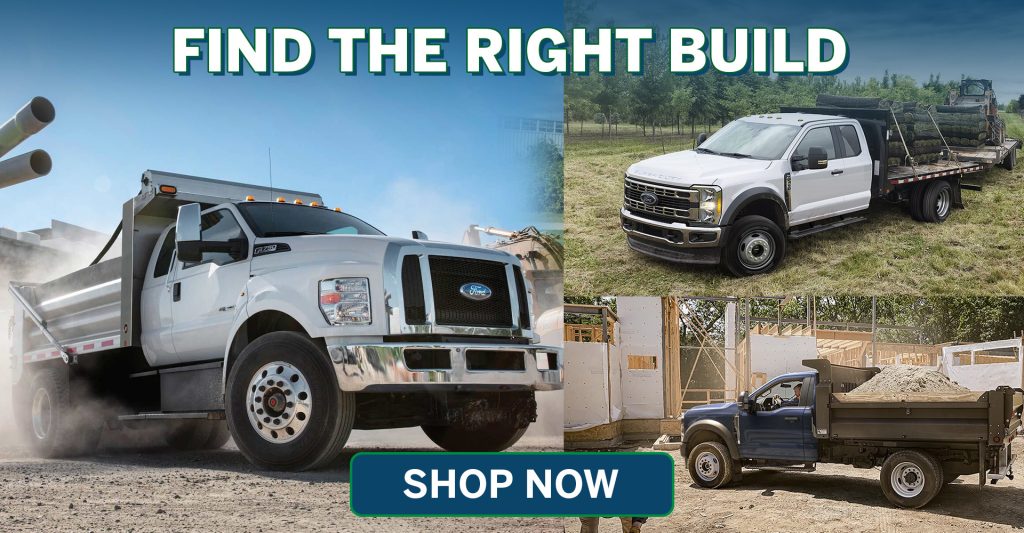
That flexibility is useful across many industries. A contractor may want a stake bed or dump body for materials. A plumbing company may need a utility body with organized compartments and secure tool storage. A landscaper may need payload capacity for equipment, mulch, stone, and seasonal gear. A towing company may need a rollback, wrecker, PTO equipment, and dependable electrical support. A municipal fleet may need a truck that can handle stop-and-go driving, jobsite idling, winter work, and specialized upfits.
This is why shopping for a Ford Chassis Cab at Portsmouth Ford is less about picking a trim and more about matching a truck to your business model. The right setup should support your workload today while giving your fleet enough margin for growth.
Start With the Upfit, Not the Badge
The smartest way to shop for a Ford Chassis Cab is to begin with the upfit. Before choosing a model, consider the body style, installed body weight, expected cargo, passenger count, towing needs, and equipment that draws power from the truck.
A utility body, service body, dump body, flatbed, box body, rollback, wrecker, and crane upfit all place weight in different areas. That matters because the finished truck must stay within GVWR, payload, front and rear axle ratings, and braking limits. A build that looks fine on paper can become frustrating if the work body is too heavy, the wheelbase is wrong, or the cab-to-axle dimension does not match the body.
Portsmouth Ford can help commercial shoppers think through these details before they commit. That is especially helpful for buyers around Portsmouth, NH, and Rockingham County who need one truck to handle mixed routes, tight jobsites, rural roads, customer stops, and seasonal demands.
Key Specs That Matter Most
When comparing a Ford Chassis Cab, the big numbers matter, but they need to be read in context. GVWR tells you the maximum loaded weight rating of the truck. Payload helps determine how much the truck can carry, including the body, equipment, fuel, passengers, and tools. Towing capacity matters for trailers, equipment, and vocational work, but it should never be considered in isolation from payload and axle ratings.
Wheelbase affects ride quality, turning radius, stability, and body compatibility. A longer wheelbase may support a larger work body, but it can make the truck harder to maneuver through tight parking lots, narrow alleys, and compact jobsite entrances. Cab-to-axle is just as important because it helps determine what body length and rear overhang will fit correctly.
Electrical planning also matters. Auxiliary switches, alternator output, battery capacity, liftgates, lighting, compressors, pumps, and control systems all add demand. Ford’s Vehicle Integration System 2.0 can help support equipment integration by providing upfitters with a cleaner way to connect to and control certain aftermarket functions. For many businesses, that can mean a more organized build with fewer compromises.
Choosing the Right Cab and Drivetrain
A Ford Chassis Cab can be configured around different cab needs. A Regular Cab often works well when maximum frame space and body length are priorities. A SuperCab can add useful interior room without going as large as a full crew setup. A Crew Cab is a smart choice when your truck regularly carries multiple workers, supervisors, or technicians.
Drivetrain choice is another practical decision. For commercial shoppers in Rockingham County, 4×4 or 4WD can be valuable for winter weather, muddy jobsites, gravel lots, and uneven terrain. The tradeoff is added weight, cost, and maintenance, so it should be chosen because the work requires it. For businesses that spend most of their time on paved roads, a simpler setup may be the better long-term value.
Engine and transmission choices should also match real-world use. The 7.3L V8 gas engine and 10-speed automatic transmission are familiar options in the Ford Super Duty® commercial space, depending on model and configuration. The right setup should reflect stop-and-go driving, towing frequency, average payload, jobsite idling, and daily duty cycle rather than peak numbers alone.
Ford F-350 Cab and Chassis
The Ford F-350 Cab and Chassis is often a strong fit for businesses that need commercial capability without stepping into a larger truck than the job requires. It can work well for lighter service builds, mobile repair needs, and organized vocational setups where maneuverability is just as important as strength.
For plumbers, electricians, HVAC teams, and smaller contractors, this model can make sense with a utility body or service body that keeps tools secure and accessible. It gives local businesses a practical way to move beyond a standard pickup while still keeping the truck manageable for daily routes around Taneytown, Westminster, and nearby Rockingham County communities.
Ford F-450 Cab and Chassis
The Ford F-450 Cab and Chassis is often the next logical step for businesses that need greater payload capacity, towing, or the ability to handle heavier equipment. It can be a strong fit for contractors, service fleets, and trades that carry more tools, larger compartments, compressors, generators, or specialty equipment.
For many commercial shoppers, this is the middle ground. It offers more capability than a lighter build while still staying within the familiar Ford Super Duty® family. If your finished work body, tools, crew, and trailer needs are starting to push the limits of a smaller truck, this model deserves a close look at Portsmouth Ford.
Ford F-550 Cab and Chassis
The Ford F-550 Cab and Chassis is built for heavier vocational work where body weight, payload, and equipment demands are a larger part of the conversation. This model is often considered for dump body applications, larger service body setups, heavier flatbed builds, and certain crane upfit needs, depending on final configuration.
A Ford Chassis Cab in this class can be a smart choice for businesses that cannot afford to operate at the edge of their ratings every day. Landscapers, construction crews, municipal departments, and material-hauling businesses often need that extra margin because real-world loads are rarely as light as early estimates.
Ford F-650 Cab and Chassis
The Ford F-650 Cab and Chassis moves into medium-duty territory for larger vocational applications. It is often considered when the finished build needs more structure, larger body options, stronger commercial presence, or a harder duty cycle than a lighter truck can comfortably support.
This model can be a fit for box body builds, larger dump applications, delivery routes, tow-related work, and fleet use where the truck is expected to handle demanding schedules. Medium-duty ownership also brings different considerations for service planning, compliance, insurance, and driver requirements, so buyers should look beyond the purchase price and consider total operating costs.
Ford F-750 Cab and Chassis
The Ford F-750 Cab and Chassis is the highest-capacity option in this group and is intended for serious commercial work. It is commonly used for heavy-duty applications, rollback applications, wrecker setups, municipal fleet use, and businesses that need durability under repeated heavy loads.
This is not the truck most buyers choose for occasional heavy work. It is the option to consider when the body, route, load, and duty cycle point clearly toward medium-duty strength. If your business needs a truck that can handle demanding work day after day, Portsmouth Ford can help you compare whether this larger platform is the practical answer.
Matching the Truck to the Work
The best Ford Chassis Cab setup depends on the finished job. A plumbing company may need a compact service body with secure storage, good turning radius, and dependable electrical support. A contractor may need a flatbed or stake bed that can carry materials without wasting capacity. A landscaper may need a dump body and 4WD for seasonal work and uneven sites. A towing company may need PTO capability, stronger electrical planning, and the right platform for a rollback or wrecker.
The goal is not simply to buy the biggest truck. The goal is to buy the right truck. Too little truck can create payload issues, premature wear, and daily frustration. Too much truck can raise costs, reduce efficiency, and make local routes harder than they need to be. A properly selected Ford Chassis Cab should feel built for your business, not borrowed from someone else’s.
Common Mistakes to Avoid
One common mistake is shopping only by model name instead of finished weight. Body weight, mounted equipment, fuel, crew, tools, and cargo all affect the final payload picture. Another mistake is ignoring axle rating. A truck may appear to have enough total capacity, but if too much weight sits behind the rear axle, the build can still be wrong.
Wheelbase and cab-to-axle planning are also easy to underestimate. If those dimensions do not align with the upfit, the body may not fit correctly, the rear overhang may be incorrect, or the truck may be less stable than expected. Electrical load is another overlooked area, especially when the truck will use lights, compressors, pumps, liftgates, warning equipment, auxiliary switches, or other powered systems.
A Ford Chassis Cab should be planned as a finished tool, not just a truck. The closer your planning reflects the way your business actually works, the better the final build will serve you.
What to Bring When You Shop at Portsmouth Ford
Before visiting Portsmouth Ford, gather as much information as possible about the upfit and workload. Bring the body type, estimated installed body weight, expected cargo, trailer needs, crew size, daily route details, and any equipment that requires electrical support. If you already have an upfit quote or body spec sheet, bring that too.
It also helps to think through your heaviest realistic day. That may include tools, materials, fuel, passengers, attachments, seasonal equipment, and trailer weight. Planning around the average day can lead to an undersized truck. Planning around the heaviest reasonable day helps create a build that works when your business is busiest.
For shoppers in Portsmouth, NH, and throughout Rockingham County, Portsmouth Ford offers a practical place to compare commercial options, talk through configurations, and narrow the lineup based on real business needs. The right Ford Chassis Cab should support your routes, crew, upfit, and long-term workload.
Find Your Commercial Truck at Portsmouth Ford
A well-chosen Ford Chassis Cab can become one of the most valuable tools in your business. It can carry the right load, support the right payload, handle the right towing needs, and make daily tasks more efficient. Whether you need a compact service build, a heavy-duty dump setup, a flatbed, a box body, a municipal fleet truck, or a towing platform, the right choice starts with understanding the work.
Portsmouth Ford is here to help businesses compare commercial Ford trucks with confidence. Visit Portsmouth Ford in Portsmouth, NH, to explore Ford Chassis Cab options, review your upfit needs, and find the model that fits your Rockingham County operation.
FAQs
What is a chassis cab truck?
A chassis cab truck is sold with a cab and exposed frame rails, rather than a factory pickup bed. That design allows an upfitter to add a work body such as a utility body, service body, dump body, flatbed, box body, rollback, wrecker, or crane upfit.
What is a Ford Chassis Cab used for?
A Ford Chassis Cab is used for commercial and vocational work that requires a specialized body. Businesses use these trucks for construction, landscaping, plumbing, HVAC, towing, delivery, municipal work, mobile service, and fleet operations.
How do I choose the right Ford Chassis Cab?
Start with the upfit, then compare GVWR, payload, towing capacity, axle rating, wheelbase, cab-to-axle dimensions, cab style, drivetrain, and electrical needs. Portsmouth Ford can help you match the truck to the finished body and real-world duty cycle.
Is a chassis cab better than a pickup for commercial work?
A chassis cab is often better when your business needs a specialized work body or heavier commercial setup. A pickup can work well for lighter jobs, but a Ford Chassis Cab gives businesses more flexibility for vocational upfits and purpose-built configurations.
Where can I shop for Ford Chassis Cab trucks in Portsmouth, NH?
Businesses in Portsmouth, NH, and across Rockingham County, can shop commercial Ford truck options at Portsmouth Ford. The team can help you compare models, discuss upfit needs, and find a configuration that fits your workload.
Connect with us


